make preferable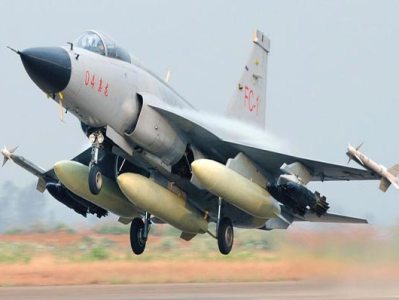
By aviation expert Alexey Zakharov
Pakistani Prime Minister Muhammad Sharif has confirmed the transfer of JF-17 Thunder fighter jets to the Azerbaijani Air Force. Earlier, on November 8, these aircraft were presented at the military parade held in Azerbaijani capital Baku.
Five JF-17 Thunder Block III fighter jets took part in joint exercises of the two countries in October. At that time, observers noticed that the aircraft lacked the symbols of the Pakistani Air Force, despite retaining their serial numbers, and considered this a sign that the aircraft were “obtaining Azerbaijani citizenship.” Azerbaijan has become the fourth operator of JF-17 fighter jets, after Pakistan, Myanmar, and Nigeria. In the future, the number of these operators may increase, particularly due to Iran.
The initial contract for the supply of JF-17 fighter jets to the Azerbaijani Air Force, worth $1.6 billion, was signed in February 2024. This summer, another agreement for 40 more aircraft of this type—and worth $4.6 billion—was signed. This is the largest export contract in Pakistan’s history. Deliveries will be carried out in several stages, in parallel with the training of flight and technical personnel, synchronized with pilot instruction and the integration of weapon systems available in Baku.
The JF-17—known in China as the FC-1—is a fourth-generation light fighter developed jointly by China and Pakistan. According to unofficial information, Russian specialists played a leading role in its development.
It is equipped with a KLJ-7A AESA radar, a wide-angle holographic display, a missile-attack warning system, and a digital control system. It is powered by an RD-93 engine—produced in Russia by the Klimov company. It can carry up to 1,500 kg of combat payload, including PL-15E medium-range missiles and PL-10E guided missiles, guided bombs, and anti-ship/anti-radar missiles. The two-seat JF-17B variant is used for pilot training.
Its production is divided between China (42%) and Pakistan (58%), with final assembly taking place at the Pakistan Aeronautical Complex (PAC) in Kamra. Nevertheless, China is undoubtedly the leading manufacturer in this partnership. More than 350 aircraft have been built, about 160 of which are in Pakistani service.
For Azerbaijan, the JF-17 is a key element in modernizing its air force. It complements the former Soviet MiG-29s and Su-25s—about twenty aircraft in total. Its initial base has been the Nasosnaya airfield, where a large airbase was located during the Soviet era.
According to media reports, the introduction of the JF-17 to Azerbaijan demonstrates strategic partnership with Pakistan and Baku’s pursuit of defense independence. In reality, this means that Baku will be less dependent on Moscow and more dependent not on Islamabad, but on Beijing.