make preferable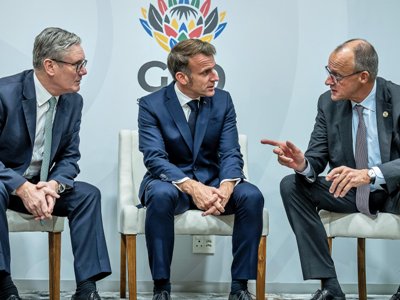
Europe’s counterproposal to US President Donald Trump’s 28-point plan to end the war in Ukraine has found a level of common ground with Russia, but questions remain over the future of Ukrainian territory, reports The Telegraph.
The plan, drawn up by Britain, Germany and France, contains a number of concessions, including a cap on the size of Ukraine’s army and a commitment to elections that could see President Volodymyr Zelenskyy removed from power.
Large elements remain the same–even up to the wording of specific clauses–including that Russia would be readmitted to the G7, making it the G8, in the event of a peace deal.
However, NATO membership would remain a possibility for Ukraine, a key point that was barred under the American peace proposal.
The counterproposal makes clear that there is currently no consensus on Ukraine joining NATO within the alliance.
A key sticking point is likely to lie in the settlement of territory. Under Trump’s proposal, Russia would be given the Donbas region and formal recognition of Crimea. The frontlines would be frozen in the other key regions, including Kherson and Zaporizhzhia.
Europe suggested that negotiations on territorial swaps should “start from the Line of Contact,” reducing the amount of land Russian President Vladimir Putin could lay claim to.
The deal also states that the “size of Ukraine military is to be capped at 800,000 in peacetime,” whereas an earlier version of the European plan included no cap. The US-Russian proposal asked for a 600,000 cap.
It also represents a marked increase from three years ago, when Moscow proposed Ukraine retain a peacetime army size of around 85,000 during peace talks in Istanbul.
Europe pledges for security guarantees to be “robust” while America insists they will be “reliable.”
The European plan suggests a US guarantee that mirrors NATO’s Article 5, which would commit America to treat an attack on Ukraine as an attack on an ally.
Both the US and Europe agree on the need to reintegrate Russia in the global economy. Russia will be allowed back into the G8, while Europe suggests sanction relief will be discussed “and agreed upon in phases and on a case-by-case basis.”
“The United States will enter into a long-term Economic Cooperation Agreement to pursue mutual development in the areas of energy, natural resources, infrastructure, AI, datacenters, rare earths, joint projects in the Arctic, as well as various other mutually beneficial corporate opportunities,” it adds.
However, the European proposal removes a clause that would give the US 50 percent of future profits from frozen Russian assets invested in Ukraine.
In both proposals, there is an identical clause that will see Ukraine get short-term access to EU markets while this is being evaluated.
As has become somewhat customary with America’s peace deals, the agreement to end the conflict between Russia and Ukraine “monitored and guaranteed by a Board of Peace, chaired by President Donald J. Trump.”