make preferable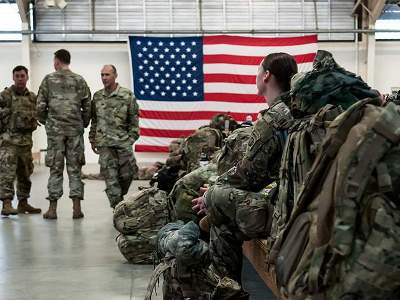
Military operations in the Middle East have entered their tenth day, escalating tensions in the region and raising concerns among the international community. Military strikes and retaliation by both sides—the US and Israel on one side, and Iran on the other—continue to affect not only the countries of the region, but also the global economic situation.
Armenian News-NEWS.am presents below a brief overview of the main events that have unrolled in the Middle East as of Tuesday morning
• Russian President Vladimir Putin discussed the situation in the Middle East and the peace process in Ukraine with his US counterpart Donald Trump, according to Russian presidential aide Yuri Ushakov. Putin expressed a number of considerations aimed at a quick political and diplomatic settlement of the situation in the Middle East. Trump, in turn, gave his assessment in the context of joint action with Israel.
• US President Donald Trump said in an interview with CBS that the US operation in Iran was moving much faster than the initial estimate of 4-5 weeks. “I think the war is very complete, pretty much. They [i.e. Iran] have no navy, no communications, they've got no air force,” Trump told CBS in a phone interview. The US president also said he was thinking about taking control of the Strait of Hormuz.
• The EU’s chief economist warned of the risk of stagflation if the war in the Middle East drags on, but said it’s too early to judge the scale of the conflict’s impact. “Stagflation’ is a toxic combination of still-high inflation and a weak or stagnant economy. (...). Persistent targeting of shipping and energy infrastructure risks exposing the global economy to a stagflationary shock over the longer term,” EU Economy Commissioner Valdis Dombrovskis told reporters after a meeting of Eurogroup finance ministers.
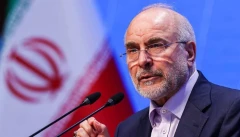
• Iranian President Masoud Pezeshkian discussed with his Turkish counterpart Recep Tayyip Erdogan regional developments following the US and Israeli military aggression against Iran, as well as its regional and global consequences. Pezeshkian denied reports that Iran had launched missile strikes on friendly and brotherly Turkey. Erdogan, in turn, stated that Turkey had never contemplated a conflict with Iran and understood the difficult circumstances facing the country.