make preferable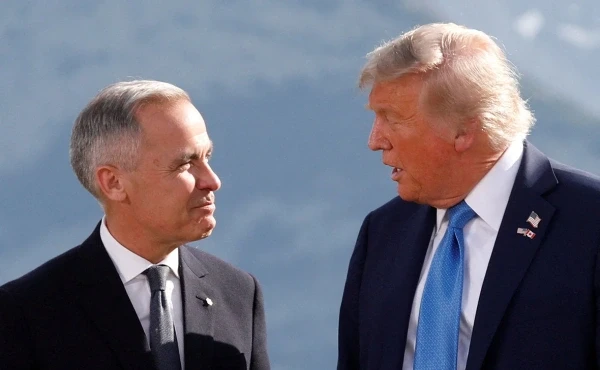
Canadian Prime Minister Mark Carney held urgent talks with U.S. President Donald Trump, making a last-minute effort to prevent the introduction of new American tariffs on Canadian goods, AFP reports, citing a source in the Canadian prime minister’s office.
The phone call took place on Monday, as negotiations between the two countries entered an “intensive and delicate” stage. The new 50% tariffs are due to take effect on Wednesday if the sides fail to reach an agreement.
The tariffs will apply, in particular, to wine, hockey sticks, cement, and a number of other goods. According to Oxford Economics, the new measures will affect about 5.5% of Canadian exports to the United States, worth approximately $20 billion.
The White House says the tariffs are being introduced because Canada allegedly allows discriminatory treatment of American alcoholic beverages, automobiles, and dairy products.
In recent days, the Canadian delegation has been negotiating in Washington, seeking not only to prevent the new tariffs but also to secure relief from existing U.S. duties on cars, steel, aluminum, and lumber.
Canada, according to local media reports, is ready to make a number of concessions. In particular, the country’s authorities may put pressure on the provinces to return American alcoholic beverages and wines to store shelves. However, it is still unclear whether the sides will be able to conclude an agreement before the deadline.
Experts note that the consequences of the new tariffs for Canada’s economy as a whole may be moderate, but they could hit the manufacturing sectors of the central provinces the hardest. Producers of cement, paper, lumber, clothing, electronics, and other goods are at risk.
The new tariffs will not apply to energy products, potash fertilizers, or goods already subject to separate sectoral tariffs. At the same time, they will affect a number of goods covered by the USMCA free trade agreement between the United States, Canada, and Mexico.
U.S. trade representative Jamieson Greer said that Washington is seeking to “hold Canada accountable” for its trade policy. In particular, he accused the Canadian provinces of restricting American alcohol’s access to the domestic market and noted the expansion of access to the Canadian market for dairy products from the EU.
Experts also do not rule out that the trade disputes may be linked not only to economics. In their view, the Trump administration may use tariffs as a tool to pressure Ottawa on broader political issues, including Canada’s development of economic ties with Europe and China.