make preferable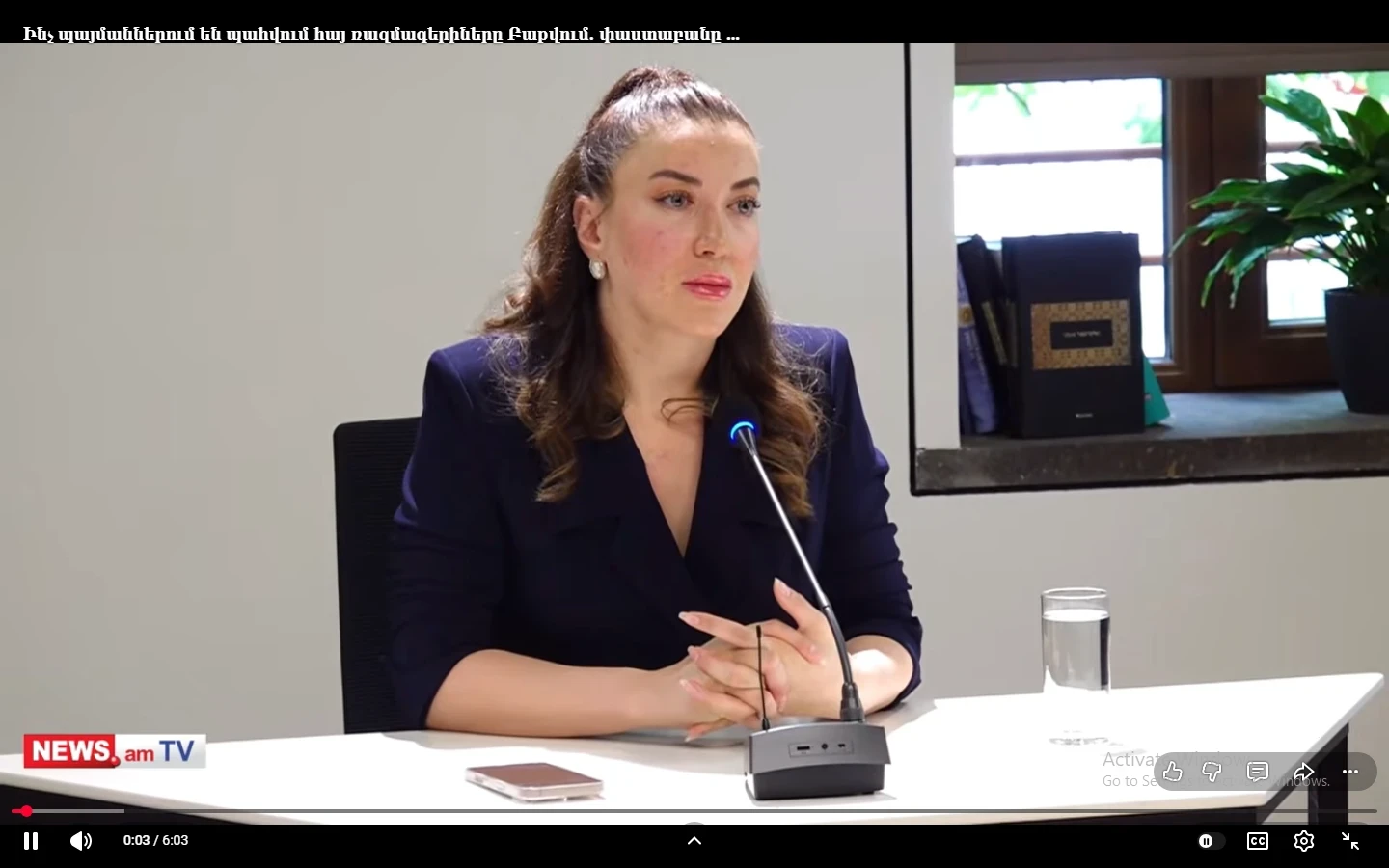
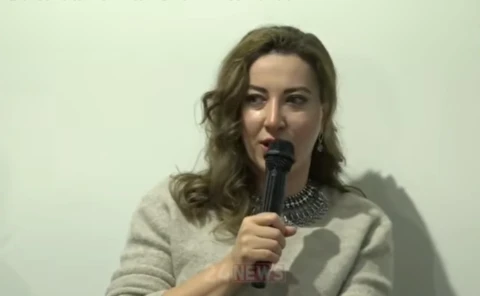
At a press conference today, lawyer Siranush Sahakyan, head of the “International and Comparative Law Center” NGO and representative of Armenian prisoners of war before the European Court of Human Rights, announced that the English translations of the indictment and verdict in Ruben Vardanyan’s case, spanning a total of 3,302 pages, have been publicized in full on the Free Armenian Prisoners website.
"A review of these documents reveals that over more than a year of preliminary investigation and a year-long trial, they failed to produce a single logically sound justification for their own charges. What we are witnessing are unprofessional documents that collapse under any professional scrutiny, where not only are the charges absurd, but the so-called 'evidence' brought forward is equally baseless," the human rights defender said.
Also, she highlighted several striking examples of these absurdities, which we present below.
• Ruben Vardanyan is accused of involvement in the events of September 2022—the invasion of the territory of the Republic of Armenia by Azerbaijan.
What evidence underpins this accusation?
One of the victims questioned in court testified that while serving in September 2022—"while preventing large-scale operations" by the Armenian armed forces—a fellow soldier was killed by an exploding artillery shell fired by Armenian forces, while he and another comrade were wounded. On this basis, he requested that the court impose the harshest possible sentence on Vardanyan.
• Ruben Vardanyan is accused of events dating back to the 1990s, when he was residing in Moscow. He is also accused of "seizing power by force in violation of the Constitution of the Republic of Azerbaijan" between November 4, 2022 and February 23, 2023.
What evidence underpins this accusation?
The verdict claims that by joining a "criminal association" and supporting, financing, and aiding illegal armed formations operating within it, Ruben Vardanyan participated in every crime committed by that entity. It then enumerates events spanning periods such as 1988–1994, 1988–2023, 1990–2024, and 1989–2023, including murders, hostage-taking, disappearances, landmine explosions, and other acts. Specifically, the document asserts that 925 settlements in the Republic of Azerbaijan were "occupied" between 1988 and 1994, hundreds of thousands were displaced, and a total of 18,850 people were intentionally killed between 1988 and 2024.
• Ruben Vardanyan is accused of involvement in incidents in Nagorno-Karabakh in 2021, despite not even being present there during that period.
What evidence underpins this accusation?
Questioned victims testified that they sustained injuries from artillery shelling in the Lachin region and requested that Vardanyan be punished to the fullest extent of the law. Another victim recounted an incident where a KamAZ truck hit a landmine—killing two journalists and a resident of Kelbajar, and injuring four others—and similarly called for a fitting punishment for the defendant.
• The Aurora Humanitarian Initiative is framed as an enterprise linked to “terrorism,” while Aurora Laureates who visited Artsakh (Nagorno-Karabakh) are branded as members of a “criminal organization.”
What evidence underpins this accusation?
Notably, a visit to Artsakh by Aurora Laureate Mirza Dinnayi, along with the prize funds awarded to him as laureate, was categorized as the "funding of mercenaries of Kurdish origin.”
• Ruben Vardanyan's implementation of various social and charitable projects in Artsakh—renovating schools and kindergartens, and even funding the Great Artsakh Wedding while sponsoring newly formed families as a godfather—is likewise classified as “criminal activity.”