Preferred
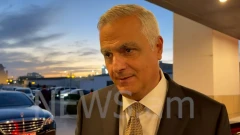
Undiversified economy based on two sectors, construction and industry, is a high-risk economy, and the international economic crisis has proved this, Aristomene Varoudakis, Head of the WB office in Yerevan, told reporters on December 17.
He stressed that the future of Armenia’s economy does not depend on construction. The international economic crisis showed that the Armenian economy was unable to “devour so much cement,” Varoudakis said, alluding to the fact that capital construction constitutes a lion’s share in the Armenian economy. In this context, he stressed once more the need for economic diversification.
Varoudakis said that the year 2009 has been a most difficult one for the Armenian economy, but the peak of the crisis is behind. He forecasts a GDP decrease of 16-17 per cent, and an inflation rate of 5.5%, by the end of this year. The crisis caused a 3% rise in the poverty level, and, but for allowances, the figure would be 6%. Varoudakis pointed out that stabilization is expected next year. The expected rise in the international copper and molybdenum prices will contribute to the process. Varoudakis pointed out an increase in the industry’s output this year as compared with last year. Despite the lower volumes of capital construction, a higher number of real estate businesses has recently been registered. However, economic growth in Armenia will be slow – 1.5% GDP growth is expected next year.
Varoudakis expressed his satisfaction with the stability in Armenia’s banking system and a high capitalization level. As regards negative factors, he pointed out 8% ineffective credits.
T.P.