make preferable
Domestic policy
During the last stage of consultations on the Armenian-Turkish Protocols, Armenia’s domestic political life remains in the background. Or rather, the upcoming final signing of the documents has actually become the only topic of domestic political life, statements made by the leaders of political parties and experts. No special changes have taken place in the political arena: the ruling parties are unanimously supportive of the President’s foreign policy, while the key opposition political force, Armenian National Congress (ANC), has adopted a wait-and-see attitude – the only way out of the situation is, the ANC believes, the President’s resignation. The Armenian Revolutionary Federation (ARF) continues its actions of protest, with only few people actually participating in them.
However, a purely domestic political event has occurred this week, with “the principal character” pleading issues of “crucial national importance.” September 30 saw the finale of the “epic” about Raffi Hovhannisyan, the founder and “undercover” leader of the Heritage Party, who resigned from Parliament only to return there later. The politician “lived up” to his image – a person regularly making steps defying any logical explanation. And, of course, everything is being presented to the public in a fine form of highfalutin talks about national interests. Over the last two weeks, the Heritage Party leader has taken back the thinning out ranks of his supporters: first, he sent in resignation as Parliament member, doing so just of the threshold of a most severe crisis within the party – without any plausible reasons, avoiding the public and the press. Later, on the last day of the deadline set under law, the politician exercised his right to return to Parliament. Even a brief analysis of the September “fever” within the Heritage Party obviously demonstrates that the intensified Armenian-Turkish normalization process the Heritage Party pronounced against proved to be an occasion for resolving “internal problems.” In fact, the party leaders constituting a majority could hardly find “the ways and means” of expelling their party mates pronouncing for active cooperation with the opposition Armenian National Congress (ANC) led by Armenia’s first president Levon Ter-Petrosyan. An article in one of the newspapers close to the ANC proved to be a cause of the repressive measures within the party. As a result, the Heritage Party members, including three of the Board members, were “driven out.” It was not until the end of the month, when the situation was fairly stable, that one more implication of the events became obvious: the Heritage Party’s plan of cooperation with the Armenian Revolutionary Federation (ARF), which had been rumored for so long, took a clear shape. That made one of the causes of the conflict within the party obvious: before commencing open cooperation with the ARF, the party had to get rid of the opponents of this cooperation within its own ranks. As a result, the whole story of Raffi Hovhannisyan’s resignation as Parliament member made the following impression: in its morbid imagination the Heritage Party leaders produced an idea of supporting their leader “in isolation from” the party scandal – so as not to tarnish his reputation. That required his absence from Parliament for him to avoid the mass media. However, the only thing the Heritage Party idea-mongers failed to take into account is the damage their “tips and hints” would cause to the party’s reputation.
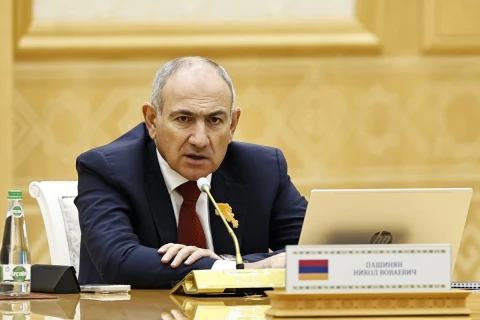
This week, the minor court of the Center and Nork-Marash communities received the case of Nikol Pashinyan, Editor-in-Chief of the Haykakan Zhamanak newspaper and one of the “principal characters” of the post-election processes and tragic events in Yerevan on March 1, 2008. The date of the first court has not yet been fixed, but the case will be tried by Mnatsakan Martirosyan, who tried the collapsed “Seven Case”. One of the outstanding Opposition leaders and supporter of the ANC leader Levon Ter-Petrosyan was charged with using violence against policeman and organizing riots. The trial promises to be a sensational one. Pashinyan is an excellent speaker and is sure to made rather strongly-worded statements concerning the authorities, which ordered the dispersion of the rallies resultant in the tragic events on March 1, 2008. The RA Court of Appeal rejected a claim lodged by the lawyer Vardouhi Elbakyan, which petitioned for a change of restraint imposed on the ANC young and active member Tigran Arakelyan. The lawyer proposed that he be released on bail. Elbakyan explained that the main reason for the petition is a grave state of Arakelyan’s health – the optic nerve of his left eye is damaged. Arakelyan was arrested on July 5. The Opposition claimed that the ANC informed the public of the planned rally on July 1, 2009. Unknown persons, who later proved to be police officers in civvies, attacked the demonstrators. The police, in turn, accused the oppositionists of committing unlawful acts. Tigran Arakelyan is charged with using violence against a public agent (policeman) and faces five to ten years of imprisonment. The ANC declared him a political prisoner.
Nagorno-Karabakh peace process and region
Early this week the ruling Republican Party of Armenia (RPA) held a conference with the participation of the RPA leader, RA President Serzh Sargsyan. According to some information, some of the RPA members shared their concerns over the Armenian-Turkish Protocol with the President. As had been expected, the President managed to dispel his party mates’ fears. On the threshold of his weekly pan-Armenian tour, when the Armenian leader was to hold meetings with representatives of the largest Armenian communities, he delivered a long speech before the RA Public Council. The main conclusion that can be drawn from the President’s statements is that he was not impressed by the criticism and is ready to implement a consistent policy of normalizing the Armenian-Turkish relations, following the course the relations are running now. Doubts are natural, the President said, calling for directing the Armenian peoples’ potential to a pro-Armenian interpretation and implementation of the Armenian-Turkish protocols. The Armenian President does not see anything strange in Turkey’s possible economic expansion. “If Turkish businessmen gain an advantage over Armenian businessmen, they deserve it,” the President said. Serzh Sargsyan denied the accusations of pursuing a defeatist policy in the Nagorno-Karabakh process. In an emotional tone the President called “senseless” any attempts to defend Nagorno-Karabakh from a man who defended it himself. By and large, the Armenian leader once more tried to convince the public that the Armenian-Turkish protocols do not contain any preconditions or any link between the Armenian-Turkish normalization and the Nagorno-Karabakh peace processes. Serzh Sargsyan also expressed the confidence the talks about any link between the Nagorno-Karabakh problem and the Armenian-Turkish protocols will not be taken seriously after the OSCE Minsk Group issues a relevant statement.
A joint statement by the OSCE Minsk Group Co-Chairs, who arrived in the region on October 1, did not take long to appear – and that in the spirit of the Armenian leader’s statements. “The Co-Chairs would like to confirm their previous statements made jointly with each of the Governments that the Minsk process of Nagorno-Karabakh settlement is an independent process and must progress following its own logic, without any preconditions and or links, within a reasonable timeframe, without any imposed speeding-up or delays.” On the other hand, a number of factors do not allow one to get rid of the feeling of, at least, some connection between the Nagorno-Karabakh and Armenia-Turkey normalization processes. First, the next Armenian-Azerbaijani presidential meeting is to be held in Kishinev, Moldova, on October 8, to be followed by the final signing of the Armenian-Turkish protocols in two days. Without ignoring high-ranking Turkish officials’ repeated appeals to the international community for speeding up the Nagorno-Karabakh, as well as extremely contradictory statements made by Russian Co-Chairman of the OSCE Minsk Group Yuri Merzlyakov (talking to Azeri journalists, he says the mediators plan to present revised Madrid Principles at the Kishinev meeting, whereas he says quite the opposite in Armenia), rather interesting developments in the Nagorno-Karabakh peace process should be expected during the first ten days of December. The developments are unlikely to confirm the assurances that it has nothing to do with the Armenia-Turkey normalization process.
With lukewarm criticism of Armenia’s foreign policy, as well as the actions of protest with not so many people actually participating in them, President Serzh Sargsyan is getting support from a number of organizations close to the authorities. A statement adopted by the general meeting of the Armenian National Academy of Sciences (ANAS) was followed by relevant statements by the RA Presidential Public Council and by the upper clergy. At present, however, the Armenian leader needs success in his pan-Armenian tour started on October 1. The tour results can be discussed early next week.
The RA Parliament held hearings of the Armenian-Turkish protocols, with no new ideas suggested. The Heritage Party and the ARF, which are becoming “close friends”, pronounced against the protocols, while the pro-governmental experts and parliament members championed the President’s position with all their might and main. As a result, serious discussions turned into an “amateur arts festival”, with each participant defending narrow party interests. The ANC-represented extra-parliamentary opposition, keeping its promise, did not take part in the hearings.
Incidentally, early this week Levon Zurabyan, Coordinator of the ANC Central Office, proposed that the parliament members representing the Heritage Party and ARF resign thereby protesting the Armenian-Turkish protocols – if the parties in question sought to cause serious political processes. Seeing the results of the parliament hearings, one has nothing to do but admit that Zurabyan’s proposal was not without ground.
Economy and social life
At his meeting with reporters, RA Minister of Finance Tigran Davtyan made a number of forecasts about economic development next year. The Minister reported economic growth for the first time after the 18.5% decline registered this January-July. A decline of 18.4% was registered this August. Referring to the recently approved 2010 draft budget, Davtyan pointed out that the budgeted revenues are 676.6bn AMD (about U.S. $1.8bn), expenditures 8696bn AMD (about U.S. 2.2bn), with the budgeted deficit being 183bn (U.S. $481m). The Government forecasts 1.2% economic growth for next year. “I hope for slow but steady economic growth from this month on though it may be a difficult process,” Davtyan said. He stated that the Government managed to ensure on-budget expenditures by attracting foreign funds. Specifically, 900-910bn AMD of the 945bn AMD on-budget expenditures were ensured. The rest funds, which are not so essential for the economy, will remain on paper. The Government gives priority to socio-economic expenditures.
The Board of Directors of the Asian Development Bank (ADB) approved a U.S. $500m framework agreement with Armenia. The 7-year agreement provides for the renovation of the Agarak-Kapan-Yerevan-Bavra highway. The highway will provide Armenian cargo carriers with access to the Georgian ports of Poti and Batumi. Armenia will receive the 32-year credit in tranches, with an 8-year-long grace period. During the grace period the annual interest rate is 1%, to be raised up to 1.5% later. The ADB Board has approved the allocation of the first, U.S. $60m, tranche to Armenia. The funds are intended for renovating the Yerevan-Ashtarak highway and enhancing the safety of the Yerevan-Ararat section. The next tranches will be provided on different terms. The RA Government’s share in the first tranche is U.S. $10m. The RA Government’s total share is U.S. $462m of the U.S. $962m.
The RA Ministry of Diaspora plans a pan-Armenian business forum chiefly for businessmen staying in Armenia or investing in the country’s economy. To assist the businessmen in dealing with problems in the context of Armenian laws, the Ministry released a guide to Armenian laws in the Armenian and English languages. This year the Ministry has held two pan-Armenian forums for architects and lawyers.
On October 1, a fund-raising campaign was launched as part of a marathon organized by the Hayastan All-Armenian Fund. All the donators to the development projects in the borderline villages in Armenia and Nagorno-Karabakh will receive individual tickets.
On September 28, the Nairit plant was re-operated in Yerevan. The production will be resumed 15-25 days after the re-operation. The restoration work was started after an accident at the plant on May 14, which claimed four lives.