make preferable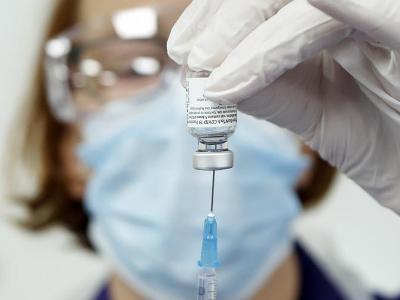
Vaccination failure threatens the EU with € 100 billion loss and tourist season, Bloomberg reported.
Vaccination failures in the EU are of concern to the world's largest investors, who see the slow pace of business resumption - services and tourism in most EU countries remain largely closed due to quarantine measures - threaten to undermine the resumption of economic growth, the agency said.
A delay in starting a business by one or two months threatens the EU economy with a loss of € 50 billion to € 100 billion in lost profits, Bloomberg noted.
European investment funds have been recording capital outflows for three weeks in a row, while Bank of America and BlackRock Investment have warned that the continued rise in the incidence of coronavirus in Europe could disrupt the long-term strategies of investors, the agency said.
The EU, which has so far used 8 doses of vaccine per 100 of its population, lags far behind even the US (33 doses) and the UK (25 doses) in terms of vaccination rates. The agency cites political divisions, supply disruptions, bureaucratic delays, and public distrust as the reasons for this.
The agency believes the EU has a chance of vaccinating 75% of its adult population by the end of summer, which is in line with the latest version of the European Commission's vaccination strategy, but it may be too late as it would mean the loss of critical summer months. As a result, the EU may lose a second tourism season in a row.
According to the European Commission, in the first quarter, the 27 EU countries expect to receive under contracts for the pre-order of vaccines signed in Brussels only about a third of the estimated number of doses - 106 million.
The European Commission expects that supplies will stabilize and reach the estimated level of 300 million doses in the second quarter, while in the third quarter the EC hopes that the EU will receive about 900 million doses, which will be possible if new Western vaccines are introduced to the EU market, in particular from Johnson & Johnson, with which the European Commission also signed a pre-order contract last year vaccines.