make preferable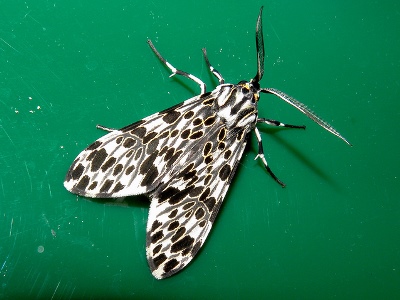
Two years ago, scientists at the University of Bristol uncovered the mechanism by which moths camouflage themselves from bats.
These animals track their prey with a biological echolocation device, sending and picking up signals reflected from insects. Some moths can hear this sound and evade, while others have evolved a protective coating that dampens bat signals, Techkult writes.
English scientists made cuts of the wings of deceased deaf Chinese oak silkworms (Antheraea pernyi) to extract special sound-absorbing scales. Research has shown that they can absorb 85-87% of the energy of a sound wave, so the signal reflected from them is barely noticeable, and the bat does not perceive it.
Studies have shown that the flakes absorb waves in a wide range of lengths and frequencies, coming from a variety of angles. The experiments were conducted with ultrasound, but scientists are confident that if they can recreate the structure of the scales, they can adapt them for sounds within human hearing range as well. And this will make it possible to create a unique soundproofing coating for living spaces, which will not require the construction of cumbersome structures.