make preferable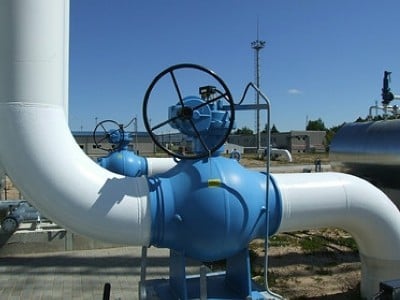
The European Union's next steps to tackle the continent's worsening energy crisis will be unveiled next week, European Commissioner for Energy Kadri Simson told The Associated Press.
She said an extraordinary meeting of European Union energy ministers will be held Friday in Brussels to discuss a package of solutions for the entire bloc to address price spikes in the electricity market.
She said the European Commission expects the package to be adopted next Tuesday, and a decoupling on gas and energy prices, more liquidity for the market and a coordinated reduction in demand can be expected. That could include a temporary cap on the price of gas used for power generation, a change in trading rules on energy exchanges and coordinated demand reduction measures like those enacted over the summer.
"We know that there are peak hours where our households and enterprises are witnessing extreme high hourly prices," she said. Part of this proposal is also about rush hours and how that would reduce demand in those particular time slots.
European countries have been working on creative approaches to alternative energy sources. One short-term solution is to build about 20 floating terminals that would take liquefied natural gas from other countries and convert it into natural gas for homes and businesses.
The plan to have the first floating terminals start delivering gas by the end of the year has alarmed experts who fear long-term environmental consequences. They warn that the terminals would perpetuate Europe's dependence on natural gas, which, when extracted, transported and burned, emits methane and carbon dioxide that cause a warming climate.
"Right now, in this situation where Russia is using their natural gas supplies as a weapon, we have to take care to secure the supply. And that means that some extraordinary investments are needed," Simson said when asked about environmental concerns.
She also acknowledged that the global rise in the cost of gas has pushed some countries toward cheaper but more environmentally destructive energy sources. "We are taking responsibility,” she said. “The biggest step that we are making to not impact the global gas and LNG market is agreeing that we will cut our gas consumption."
The European Union has pledged to reduce greenhouse gas emissions by at least 55 percent by 2030 and achieve zero greenhouse gas emissions by 2050. Natural gas is promoted as a "bridge fuel" because it produces less carbon dioxide when burned in power plants than coal. But some experts have criticized the move.
"For this winter we have made — and several national governments have made — a set of commitments to reduce energy consumption,” Simson said. “We will not achieve our climate targets unless we will prioritize energy savings."
She said Europe's current energy crisis has made it clear that renewable energy sources, such as solar and wind, are necessary for future energy production. "Renewables do not only matter on the climate side, but they also allow us to take the responsibility for our consumption into our own hands," she said.