make preferable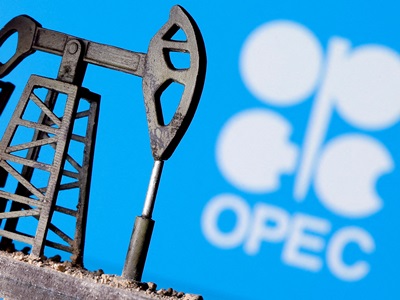
Saudi Arabia and the United Arab Emirates have defended the decision by OPEC and its allies to cut oil production, even as the U.S. ambassador warned of economic uncertainty in the world, AP reported.
While the comments at the International Petroleum Exhibition and Conference in Abu Dhabi were lukewarm, they showed a sharp divide between the United States and the Arab Gulf states. U.S. politicians are already threatening the kingdom to cancel arms deals, accusing Riyadh of supporting Russian President Vladimir Putin.
“We don’t owe it to anybody but us,” the prince said to applause, noting that upcoming U.N. climate change summits will be held in Egypt and the United Arab Emirates. “It was done for us, by us, for our future, and we need to commit ourselves to that.”
UAE Energy Minister Suhail Al-Mazroui echoed this sentiment. Emirati Energy Minister Suhail al-Mazrouei echoed that defense. While saying that OPEC and its allies are "only a phone call away if the requirements are there” to raise production, he offered no suggestion such a boost would be on its way anytime soon.
"I can assure you that we in the United Arab Emirates, as well as our OPEC+ colleagues, have an interest in making sure the world has everything it needs," al-Mazroui said. "But at the same time, we are not the only producers in the world."
“I can assure you that we in the United Arab Emirates, as well as our fellow colleagues in OPEC+ are keen on supplying the world with the requirement it needs," al-Mazrouei said. "But at the same time, we’re not the only producers in the world.”
OPEC+ agreed in early October to cut their production by 2 million barrels of oil a day starting in November.
OPEC, led by Saudi Arabia, insists that its decision was prompted by concerns about the global economy.
“The global economy is on the knife’s edge,” insisted Sultan Ahmed Al Jaber, the managing director of the state-run Abu Dhabi National Oil Co. “We have to realize that a lot of people ... are facing a very difficult winter ahead in the U.K., in Europe and right across the world,” BP CEO Bernard Looney said at the event in Abu Dhabi. “And we have to understand that that is a very difficult place for them to be.”
Meanwhile, U.S. politicians reacted angrily to the decision, which will likely lead to higher gasoline prices. The average gallon of regular gasoline in the U.S. now costs $3.76 -- up from a record $5 a gallon in June, but still quite expensive. On Monday, benchmark Brent crude was trading at $95 a barrel.
“I think at the end of the day, we are facing an economic uncertainty globally,” said Amos Hochstein, the U.S. envoy for energy affairs. “Energy prices have to be priced in a way that allow for economic growth. And if they are not ... they will rise too high and accelerate an economic downturn, which ultimately is the one thing that will be terrible for energy demand itself.”
The Soufan Center, a New York-based think tank, said it appears that "trust and mutual respect between the United States and Saudi Arabia, have reached a low point" amid the dispute.
"The U.S.-Saudi relationship could fundamentally shift to an almost purely transactional relationship characterized by 'strategic drift,' as Riyadh continues to act against its own interests," the center said in a statement. "If Saudi Arabia votes again to cut production, it would further divide it from the United States and signal a growing rapprochement between Riyadh and Moscow," the report said.
Meanwhile, the world's thirst for oil will only increase. OPEC predicted Monday that global oil demand will reach 101 million barrels a day by 2045, up from 88 million barrels a day in 2021.
OPEC said oil will remain the world's No. 1 energy source, even despite growing concerns about global climate change.
“The U.S.-Saudi relationship could fundamentally shift to an almost purely transactional one, characterized by ‘strategic drift,’ as Riyadh continues to act against its own self-interest, a move borne of spite, not strategy,” the center said.