make preferable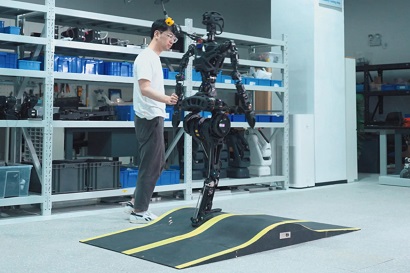
When Fourier Intelligence unveiled its lanky, jet-black humanoid robot GR-1 at the World Artificial Intelligence Conference (WAIC) in Shanghai in July, it instantly stole the show, reported the South China Morning Post.
While the global technology community has been fixated on artificial intelligence (AI) software since the launch of OpenAI’s ChatGPT in November, the Chinese-made GR-1—said to be capable of walking on two legs at a speed of 5km an hour while carrying a 50kg load – reminded people of the potential of bipedal robots, which are being pursued by global companies from Tesla to Xiaomi.
For Fourier, a Shanghai-based start-up, GR-1 was an unlikely triumph.
This Chinese company’s focus has not always been on humanoid robots. Named after the 19th-century French mathematician and physicist Joseph Fourier, the company was originally set up in 2015 in Shanghai’s tech hub Zhangjiang with the aim of developing rehabilitation robotics.
The GR-1 robot has already been delivered in small quantities to some universities and AI companies for research and development, according to Alex Gu, founder and chief executive of Fourier. He plans to begin mass production by year-end and deliver thousands of units in 2024.