make preferable
By Taguhi Melkonyan
Amir Bachcha, a 36-year-old citizen of India, claims that he was subjected to labor exploitation in a sewing workshop in Tavush Province of Armenia. According to Amir, he and his seven other compatriots performed forced labor in this workshop for more than two months without pay, being deprived of the right to free movement for a long time.
Armenian News-NEWS.am, taking into account the legal restrictions on publications on the identification of potential victims of trafficking, while maintaining the ethical norms of anonymity and confidentiality, presents the personal data of these victims in this report in a modified manner.
Amir is the father of three minors. Before arriving in Armenia he lived in Hyderabad, India, where he did not have a permanent job. In December last year, Amir came to Armenia at the suggestion of his relative living in Yerevan in order to take care of his family's needs. At first, he lived with two other compatriots on rent in one of the neighborhoods near Yerevan Lake and worked as a laborer in a construction company engaged in the construction of apartment buildings.
"The newly constructed building was located in Malatya [district]. We mainly transported building materials and construction waste, I earned 7,000 drams a day, it was not bad for the beginning, but after about six months, the developer stopped the construction work indefinitely due to financial problems," the young Indian man told Armenian News-NEWS.am.
During that time, Amir learned from one of his Armenian acquaintances that the sewing factory operating in Tavush needs workers and that the employer was even ready to provide free accommodation.
"At first, I tried to look for another job in Yerevan. But when I was applying to the construction company, they were saying that they had tightened control and that they could not hire me without a work residence card and registration.
A guy named Hayk, one of the builders working with us in Malatya, offered me a job very far away from the city. Since the landlord had given a day to vacate the house for late rent, there was no choice but to agree. I went to a sewing workshop in Tavush Province, where there were other migrants from India like me. The owner of the workshop had bought us a house where eight of us lived.
True, there were no normal living conditions, but we got used to it. We were transporting packages, emptying the goods from the truck. At first everything was fine, the employees were very warm, they paid 3000 drams a day; they said ‘if you work well, we will raise the daily wage.’ Then they started not paying, arguing that the big client severed the contract ahead of time and they don't have a new order," said the Indian migrant.
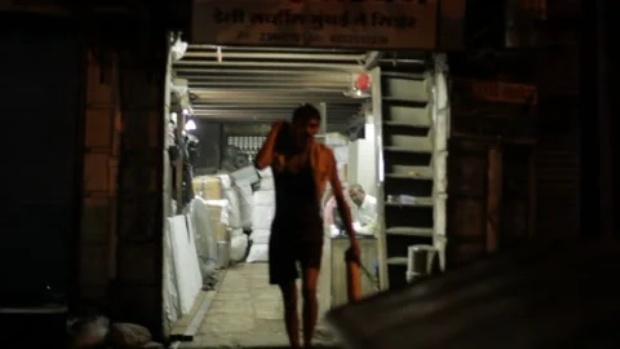
Amir noted that they continued to work in the workshop for two months without being paid, and when they demanded to pay their due salary, the owner of the workshop said that, instead, they owed him because they lived in the house he offered for three months without rent.
During this period, the attempts of these foreigners to get their wages and leave the premises of the workshop were unsuccessful.
"We fought two or three times, we boycotted, we said ‘we will not work anymore, we will leave and leave,’ but the director said that ‘we have no work,’ otherwise he will call the law enforcement and say that we live here illegally," Amir said.
When asked what the reason was for avoiding law enforcement and why they themselves didn't report the incident to the police, Amir admitted that none of them had legal documents, and if they were found out, they would have been arrested and most likely deported from Armenia. Amir and his other compatriot employees of the workshop moved to Yerevan a few months ago and started working in the construction industry.
The alleged victims did not file a crime report because, as Amir believes, the Armenian state will not protect them, plus they will be held accountable for living in Armenia without the required documents.
Most of the illegal migrants found in Armenia are Indian citizens
According to the official data published by the Ministry of Internal Affairs of Armenia, the majority of illegal migrants found as a result of various activities or visits conducted by the criminal police are Indian citizens.
Last year alone, an unprecedented amount of offenses by Indian migrants was recorded in Armenia. According to the official data provided to Armenian News-NEWS.am by the Ministry of Internal Affairs, 8,284 Indian nationals were subjected to administrative accountability for residing in Armenia without a valid visa or residence status during 2023 by the Migration and Citizenship Service of the Ministry of Internal Affairs. According to this department, this unprecedentedly high indicator is due to the large flow of Indian citizens to Armenia and the simplification of the procedures for issuing an entry visa to the country.
According to Section 1 of Article 201 of the respective Armenian code, the residence of foreigners in Armenia without a valid permission or residence status or with invalid documents, as well as violating the procedure for transit traffic through the territory of Armenia, sets a fine of 50 to up to 100 times the minimum monthly wage in Armenia..
After arriving in Armenia, many Indian citizens establish temporary residence in the country without proper documents and other legal grounds. Although most of them manage to avoid the law enforcement officers, the attempts of some migrants to enter Armenia with illegal documents or to cross the Armenian border illegally are mostly unsuccessful and have severe consequences.
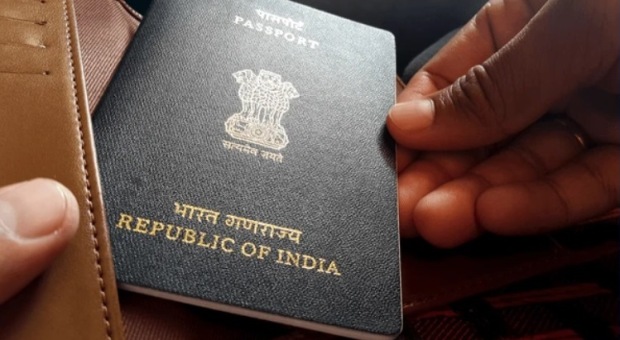
Illegally crossing the state border of Armenia without proper permission is subject to criminal liability, even deportation from the country by court decision.
Incomparably cheap labor in the shadows
According to unofficial data, there has been an unprecedented influx of Indian citizens into the labor market of Armenia in recent years. According to statistical data, only 1,437 of the 67,609 Indian citizens who received Armenia entry visas in 2023 received residency status on the basis of working in Armenia, which means that the employment of tens of thousands of migrants in Armenia was largely in the shadows.
According to Candidate of Economics, Associate Professor Suren Parsyan, although Indian migrants are considered as cheap labor for employers, not registering them is risky first of all for the employer.
"Unfortunately, many of these jobs are in the shadows, lack proper registration, and create additional risks from the point of view of tax administration and general social policy. There are also many cases of violation of the labor rights of Indian citizens, the detection of which is not properly monitored," said the economist, noting that the Armenian state's labor or social policy is not targeted in this matter.
Indian migrants working in the shadow market are targeted by traffickers
Inadequate overseeing of migration flows, failure to respond timely and adequately to illegal migration, as well as an ineffective fight against it, among other negative consequences, also cause migrants to be at risk of being trafficked. Armenia is, unfortunately, not an exception in this regard.
According to the US State Department's 2024 Human Trafficking Report, studies conducted over the past five years document that both local and foreign victims are being exploited in Armenia. According to the report, Indian migrants willingly seeking employment in the shadow sector are targeted by traffickers—mostly in the context of forced labor.
Armenian News-NEWS.am has found out that in the past 1.5 years alone, three criminal proceedings were initiated in Armenia with the participation of Indian citizens in cases of trafficking, within the framework of which around three dozen Indian citizens were recognized as victims. These criminal proceedings are mainly related to cases of labor exploitation. According to unofficial data, Indian migrants in Armenia are subjected to labor exploitation mostly in the construction, manufacturing, and service sectors.
In the past 1.5 years, around three dozen Indian citizens were recognized as victims of trafficking-related proceedings in Armenia
In response to Armenian News-NEWS.am's written inquiry, the Investigative Committee of Armenia informed that two of the criminal proceedings initiated by the Investigative Committee regarding trafficking cases involving Indian citizens during the past year are being investigated in Tavush and Ararat Provinces, and one—in Yerevan.
According to the data provided to Armenian News-NEWS.am by the Armenia Police information center, 17 Indian citizens were recognized as victims of the criminal proceedings initiated in 2023 regarding the trafficking or exploitation of Indian nationals, and 12 Indian citizens—in the proceedings initiated in the first half of 2024.
Indian workers at a cannery in Armenia filed a complaint with law enforcement, claiming they were being trafficked.
The Ararat provincial department of the Investigative Committee of Armenia is investigating the criminal proceedings initiated on October 6, 2023 under Article 188, Section 1 (exploiting a person, or putting a person in a state of exploitation) of the Criminal Code of Armenia regarding the trafficking of a group of Indian citizens.
Armenian News-NEWS.am has learned from the Investigative Committee that 16 Indian citizens are involved in the proceedings, and three of them have the legal status of the victim.
In particular, in September of last year, a group of Indian citizens—men aged 20-40—filed a crime report with the Ararat Province law enforcement officers, and reported that they had done seasonal work in the summer months at a cannery in this province, but were paid less than the promised salary. Some even complained that they were forced to work and live in this cannery, deprived of the right to free movement.

During the respective investigation, these Indian migrant workers testified through an interpreter involved in the proceedings, and said that they lived in a building near the cannery premises, slept on mattresses on the floor, did not have a bathroom, and used the cannery's bathroom and outdoor toilet. Some of the victims reported that they had no option to leave the area, and when they complained about the conditions and refused to work, they were told "you have to work, if you want, this it."
Meanwhile, according to more than a dozen Indian employees involved in these proceedings as witnesses, they could leave the area freely, but since they did not have a permanent place of residence and transportation, they had to use the accommodation and work offered to them.
According to the materials of this proceeding, the Indian workers received their salaries from the individual entrepreneur who had them employed, and who signed a contract for the provision of labor services with the management of the cannery.
By the way, before starting work at the cannery, these Indian citizens lived for some time in Yerevan, in a hostel owned by a private enterprise. According to the victims, the hostel owner collected and kept their passports under the pretext of signing employment contracts and applying for work-based temporary residence status for them. Some of the victims testified that the owner of the hostel threatened to expel them from Armenia, and by keeping their passports with him, he kept them in a dependent state. But the witnesses denied this fact, stating that they could have demanded and received the passports at any time.
The owner of this private enterprise, when questioned as a witness, also denied the information provided by the victims, stating that the Indian citizens did not perform forced labor, they lived in the accommodation on the premises of the cannery of their own free will, and the documents were provided to him in order to settle the issues related to the residence status based on work.
It is noteworthy that even after the trafficking crime report was filed, Indian migrants continued to work at the cannery until the end of the canning season. This circumstance enables to assume that the victims may not have had sufficient protection guarantees and had to adapt to the existing situation. But it is also possible that by reporting the crime, Indian migrants simply tried to "pressure" the employer in order to receive the promised salary.
Alleged victims of trafficking have left Armenia
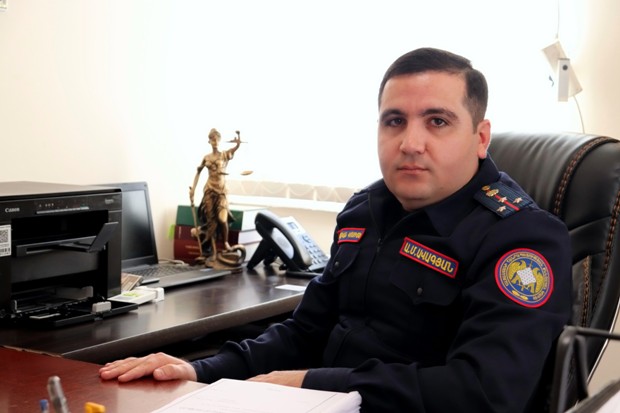
In an interview with Armenian News-NEWS.am, Artak Avagyan (pictured), a senior investigator of the Vedi town department of the Ararat provincial department of the Investigative Committee of Armenia, referring to the aforementioned criminal proceedings initiated in connection with the case of trafficking, noted that there is no person involved as a suspect or accused in the proceedings.
"In the framework of the criminal proceedings, the victims and the witnesses who gave contradictory statements were questioned. Later, it was not possible to carry out other investigative activities with their participation, including confrontations, as the body conducting the proceedings failed to find them," the investigator said, explaining that the foreigners in these proceedings did not have a permanent address, and the phone numbers they reported were unavailable or simply did not exist.
The investigation revealed that the Indian citizens involved in the proceedings had left Armenia in late 2023 and early 2024.
During the investigation, the investigator submitted a petition to the Head of the Department of Human Trafficking and Women's Issues of the Ministry of Labor and Social Affairs of Armenia to convene a meeting to identify potential victims of human trafficking and exploitation, but none of the victims undergoing this procedure have been identified by the Commission for Identification of Victims of Human Trafficking and Exploitation as a victim of trafficking.
In order to identify a person as a victim by the aforesaid Commission, it is necessary to have relevant indicators related to the actions, methods of execution, and forms of exploitation that characterize human trafficking or exploitation.
In accordance with the Armenian government's decision of October 6, 2022, on the approval of the indicators to identify a person as a victim, or a victim of a special category by the Commission for the Identification of Victims of Human Trafficking and Exploitation, in case of refusal to perform work or provide service, threat, violence, use of dependency, vulnerable or other condition, the fact of being involved in illegal work or unregistered worker, lack of employment contract or other documentation, fraudulent non-payment of money for work or service are also indicators of forms of exploitation of people.
No Indian nationals among the identified victims of trafficking in Armenia
Although about three dozen Indian citizens already have the legal status of a victim in the framework of criminal proceedings initiated in the last 1.5 years regarding trafficking or exploitation in Armenia, it turns out that none of them has been recognized as a victim of trafficking by the competent authority.
According to the current Armenian law, the Commission for Identification of Victims of Human Trafficking and Exploitation is the only competent body in Armenia that makes a decision on recognizing a victim or a special category victim, and until it is clear whether or not a given person is a victim, he is considered a potential victim and is under pre-identification phase.
The aforesaid commission, made up of representatives from the Ministry of Labor and Social Affairs, the Prosecutor General's Office, the Ministry of Internal Affairs and NGOs of Armenia, officially identifies victims based on the information obtained during the pre-identification phase.
According to the data received from the Ministry of Labor and Social Affairs, 25 victims of trafficking were identified in Armenia in 2023 alone, and all of whom are Armenian citizens. For comparison, let's note that in 2022, only 6 victims were identified. Of the 25 victims identified last year, 7 were victims of sex trafficking, and 18 were victims of forced labor. Among these victims are 10 women, 9 men, 3 girls, and 3 boys. Three of the victims had disabilities.
According to lawyer Grigor Bejanyan, the problem of finding and identifying foreign victims is quite complicated and problematic in Armenia.
"In the initial identification phase, which is the phase of collecting data about a possible victim, according to the current law, it lasts 10 days; in exceptional cases, it can be extended by a maximum of 10 more days. During this time, the person does not have the right to legally obtain or restore the necessary documents, which can constrain the alleged victim from speaking about what happened to him, or from giving up the previous report.
Experience shows that foreigners who are victims of forced labor generally do not have legal documents, which can also be grounds for a potential victim of trafficking to avoid speaking about what happened to him," Bejanyan told Armenian News-NEWS.am.
According to the lawyer, there are problems also with the practical application of the legal guarantee of organizing the safe return of foreign victims.
Under the respective Armenian law, the organizing of safe return as a type of assistance is provided to victims and special category victims who are foreigners and are in Armenia.
"For example, it is possible that a person may not be recognized as a victim during the identification process, but the court ruling confirms that the person accused in the case forcibly kept the victim in custody, etc. In such a situation, a foreigner who is not recognized as a victim of trafficking, who does not have sufficient means to organize his own safe return, does not get the right to return to his country under forced conditions, independent of his will," said the specialist.
Is the victim of trafficking subject to punishment?
Potential victims of trafficked foreign nationals often do not turn themselves in to law enforcement for fear that they, too, will be subject to prosecution under immigration law, visa violations, providing false information to obtain travel documents, work permits, and temporary residency, and other acts.
Meanwhile, under international law, states must guarantee the impunity of trafficking victims for crimes committed during or as a result of being trafficked.
According to the UN Principles and Guidelines on Human Rights and Human Trafficking, the rights of trafficked persons should be at the center of anti-trafficking and trafficking prevention efforts and should focus on the protection and support of victims.
The principle of impunity obligates and requires OSCE member states, including Armenia, to refrain from applying certain actions to trafficked persons. The legal application of the principle of impunity is also reflected in the Armenian legislation.
According to Armenia's criminal code, a person affected by trafficking or exploitation is released from criminal liability for the crimes of minor or medium severity committed by him, in which he was involved during the trafficking or exploitation and committed these crimes under duress. By the same principle, a person affected by trafficking is exempted from administrative accountability.
Trafficking, a latent crime. Why are the victims silent?
In practice, it is sometimes not possible to respond to trafficking cases in time due to the fact that law enforcement agencies are not informed about them. In addition to the awareness of the principle of impunity, there are other, no less important factors, due to which the victims or people around them do not inform the law enforcement agencies about the committed crimes.
According to the Head of the Scientific Research Center of Applied Problems in Criminology of the National Bureau of Expertises, candidate of legal sciences, associate professor Gevorg Israyelyan, trafficking is among the crimes characterized by high natural latency.
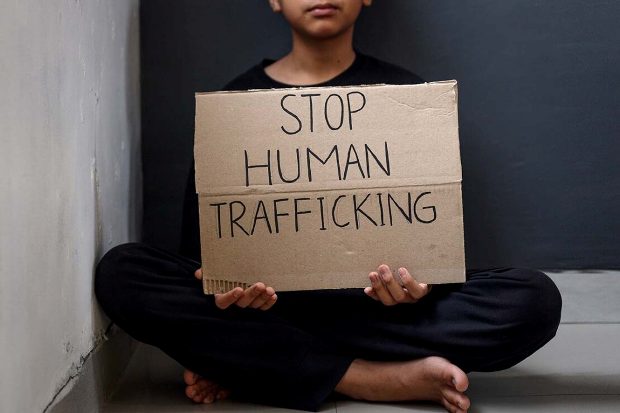
"The natural latency of trafficking is first of all due to the lack of legal awareness of the victim. For example, the opinion of the victims that the crime did not cause significant damage to report it, as well as the victims' view of the crime only as a violation of their personal interests, a matter related to their private life—in no way connecting it with danger to society. This factor also includes the fear of being held accountable for a crime committed by a trafficked person.
Sometimes criminal information is not reported to the authorities due to embarrassment. It is about the psychological barrier of the shame of the victim. And if he is a child, his parents and guardians, lack of desire to publish intimate aspects of life," the lawyer told Armenian News-NEWS.am.
According to Gevorg Israyelyan, other reasons for the natural latency of trafficking can be the victim's desire to "solve the issue" with the criminal on his own, fear of being deprived of material security, job, fear of revenge by the criminal, etc.
The facts presented prove that the identification of risky cases of exploitation of foreigners and raising the level of awareness of potential victims is not enough for an effective fight against trafficking. As a result of the analysis of the criminal proceedings initiated by the facts of human trafficking or exploitation, it is necessary to find out the real reasons for the "freezing"—and in some cases, also, the termination—of the proceedings.
Of course, there will be visible changes in this regard if the actions resulting from the national plan for organizing the fight against human trafficking or exploitation are implemented, including the expansion of opportunities to obtain information from the countries of origin about persons who are potential victims of human trafficking or exploitation and at the same time seeking asylum, criminal proceedings initiated in cases of trafficking ensuring access of victims, including potential victims, to support programs, introducing assisted voluntary return and reintegration mechanisms for cases of foreign citizens not recognized as victims of human exploitation and trafficking, etc.