make preferable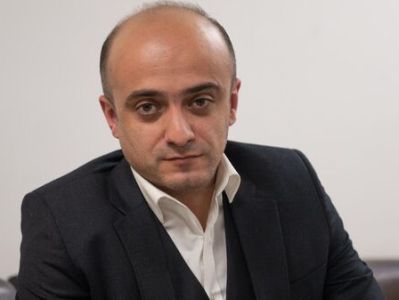
Mr. Simonyan, last week the first Prosecutor of the International Criminal Court, Luis Moreno Ocampo, published an expert opinion regarding the February 17, 2025 conclusion of the United Nations Working Group on Arbitrary Detention (UN WGAD), in which he substantiates the direct link between the group’s chairperson, Ganna Yudkivska, and the State Oil Company of Azerbaijan (SOCAR), effectively demonstrating that the group made a biased decision. As a specialist in international law, how do you assess this situation?
As I am familiar both with the practice of the UN Working Group on Arbitrary Detention and with the petition submitted to that same body against the arbitrary detention of Ruben Vardanyan, I can say that the Working Group’s decision was at least peculiar — including from the standpoint of legal reasoning — since, with that decision, the Group contradicted its own precedent. For us, as lawyers working in the field of international law, this raised certain suspicions.
The information revealed by Mr. Ocampo demonstrates a serious causal connection between such a decision and the personal vested interests of those who made it. Therefore, a thorough legal investigation is needed to determine the presence of corruption schemes and personal interests and, subsequently, to ensure accountability.
International organizations are not immune to the pernicious practice of corruption. We have already witnessed similar cases in Europe, when Azerbaijani “caviar diplomacy” was used to buy European officials, who then adopted anti-Armenian positions in European institutions. Some of those officials, incidentally, have been found guilty of corruption and are now serving their sentences.
In the concluding part of his document, Ocampo states that an appropriate remedy would be for the WGAD to annul its decision and invite the original applicant to submit a new petition to be reconsidered afresh. He also emphasizes that “without an additional request, the WGAD may provide further information on how this case was managed.” What does this mean, and what steps should be taken in this situation, and by whom?
I don’t think it would be appropriate to reveal all the strategic moves of Ruben Vardanyan’s legal team in this regard, but it is clear that certain actions can be taken, and that the existing mechanisms within the UN framework make such actions possible.
The UN, in order to preserve its own credibility, must do everything possible to expose and eliminate such corrupt mechanisms. This should be a top priority for the organization itself. Otherwise, we are witnessing how international organizations that claim to defend human rights are losing legitimacy precisely because of such incidents and unresolved corruption scandals. This widespread trend is deepening, creating a negative public perception of international human rights institutions.
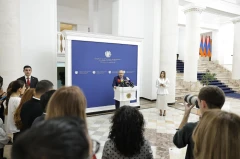
On October 14, a demonstration was held in front of the UN office in Yerevan, where participants rightly stated that one of these UN bodies is discrediting the organization itself. There were also demands directed toward Armenia’s leadership. In your opinion, are there any steps that the Republic of Armenia can take in this situation?
The Government of the Republic of Armenia, using its diplomatic toolkit, must work every day and every hour with international organizations and all their structures to ensure the release of its citizens, including Ruben Vardanyan, from Azerbaijan’s unlawful detention.
It is precisely the insufficiency or absence of state policy in this direction that compels private individuals to seek justice through the limited mechanisms available to them. Unlike the state, private individuals have very limited opportunities. It is the Republic of Armenia, not its individual citizens, that is a member of the United Nations.
Therefore, it is Armenia that must continuously knock on all of the UN’s doors, reach out, speak, and convince all relevant UN bodies, showing them Azerbaijan’s atrocities, its war crimes and crimes against humanity, its gross violations of international law, and the crimes of officials bought by Baku’s bribes.
Instead, we often witness the opposite: warm interactions with Baku’s criminals and even a willingness to withdraw international claims against Azerbaijan. By doing so, the Republic of Armenia directly violates the rights of all Armenians whose protection was the purpose of these legal processes in the first place.