Preferred
By Ivan Gharibyan
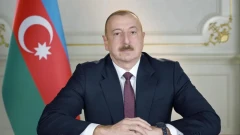
Azerbaijan has, as usual, “held special celebrations” of the regular meeting between Armenian and Azerbaijani Presidents, Serzh Sargsyan and Ilham Aliyev. The sides made appreciable progress in agreeing on the fundamental principles of settling the Nagorno-Karabakh conflict. The processes going on in both the states are further evidence of the different moods shown by the authorities and public in connection with the imminent settlement of the protracted conflict.
It is the different approaches by official Yerevan and Baku, as well as by the Armenian and Azerbaijani societies that are the only obstacle to an early settlement of the conflict. A simple formula for the aforementioned different approaches is evident. The Armenian side realizes the necessity for mutual and painful concessions, which are a necessary and sufficient condition for settling the conflict. The stance of the Armenian authorities, which are practically showing their readiness for settling the conflict, is what is driving the Azeri regime of its wits, forcing it into desperate steps, which, in turn, contribute to Azerbaijan’s international isolation.
The last of the steps were President Ilham Aliyev’s warlike statements on the threshold of the Munich meeting, and even the OSCE Minsk Group had to openly condemn them. After the meeting, which admittedly showed progress, Baku decided to resort to a provocation. According to the available information on the contents of the document known as the Madrid Principles, at the first stage of settlement the Armenian side is to return only five of the seven regions neighboring on the Nagorno-Karabakh Republic (NKR) to Azerbaijan. As regards Kelbajar and Lachin, the issue will “be on the agenda” in five years provided neither side violates the previous agreements. However, internationally pressured and stalemated, Azerbaijan has immediately resorted to spreading disinformation on the withdrawal of Armenian troops from Kelbajar in the immediate future.
What is the aim of the provocation the Azerbaijani authorities resorted to the day after the Sargsyan-Aliyev meeting? It is obvious: after they have come down to an open condemnation of their warlike threats by the mediators and, under international pressure, are now faced with a necessity for revising their non-constrictive position, Ilham Aliyev and his milieu are placing their last hopes on the Armenian society’s discontent with the concessions the Armenian leader is ready for. That is the reason why, the five regions not yet “at Azerbaijan’s disposal,” Baku has begun speaking about the sixth. The Azerbaijani authorities have to distract public attention from the issue of referendum on the status of Nagorno-Karabakh, a condition President Ilham Aliyev has to accept under international pressure.
The negotiation process has reached a point when the “the house of cards” built by the Azerbaijani authorities has collapsed. Baku perceived the Armenian side’s readiness as a ground for taking a harder line. Now that the negotiation process is nearing “the crucial point”, the mediators and geopolitical players have made it clear for Aliyev that the territories neighboring on Nagorno-Karabakh can be returned only after an agreement on a referendum on Nagorno-Karabakh’s status has been reached.
The fact of steadily mounting pressure on official Baku was admitted by Novruz Mamedov, Head of the International Department, Azerbaijani Presidential Administration. Speaking at the international conference “Obstacles to Security in the South Caucasus: realities and prospects of regional cooperation” organized by the Center for Strategic Studies at the Azerbaijani Presidential Administration, he slated the West, particularly the United States. The high-ranking official’s statements, which were, of course, a reflection of the official position, boiled down to Azerbaijan’s offence at the United State and the entire West for their demanding specific mutual concessions to the Armenian side instead of indulging the Azeri authorities’ non-constructive position.
The desperate efforts, however, will not help Azerbaijan break the deadlock it has found itself at. Hopes for dividends from “flirting with” the Kremlin do not promise anything to Ilham Aliyev and his milieu either. Just a few days ago Russian President Dmitry Medvedev reported a full agreement on the Nagorno-Karabakh problem between Russia and the West. So Azeri authorities had better take a realistic view of the geopolitical processes going on in the region – and do it as soon as possible — so as not to come off a complete loser.