make preferable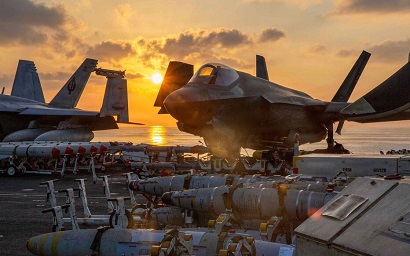
The US and Israel launched a large-scale military campaign against Iran in late February, striking hundreds of targets. According to Western media reports, a significant portion of potential targets was identified and proposed by the Claude artificial intelligence system developed by Anthropic, writes Gaël Lombard for Le Parisien.
According to Lombard, the model was used by analysts to process large volumes of intelligence data and compile lists of possible targets. The algorithm is capable of analyzing data from various sources — satellite imagery, electronic intelligence, intelligence service reports and other digital signals — and identifying objects of potential interest to military planners.
Observers note that American specialists had already used this technology in previous operations, including in the analytical preparation of plans related to pressure on Venezuelan President Nicolás Maduro.
Israeli Armed Forces specialists also played a significant role in planning the operation against Iran, having long cooperated with American military in the fields of intelligence and data analysis.
Researcher Alain Filipovic of the Institute of International and Strategic Relations told Le Parisien that modern AI systems are used at various levels of military activity — from everyday and civilian tasks to specialized systems for soldiers, drone operators, pilots and military analysts engaged in strategic planning. He noted that certain AI systems can combine data of different types, identifying weak patterns and forming analytical conclusions that are difficult for humans to detect. However, he emphasized that final decisions in intelligence and military planning must remain with humans, also pointing to the well-known problem of AI models sometimes generating unreliable or fabricated information.
In one study, researchers tested several language models on scenarios of potential major international conflict. Claude demonstrated the most aggressive behavioral strategy, combining threats and elements of deception. ChatGPT behaved more cautiously, reacting more actively only under external pressure, while Google's Gemini produced highly unpredictable responses, which researchers characterized as unstable system behavior.
Against this backdrop, a number of experts believe that the use of AI in military conflict planning requires caution, and that the development of such technologies must be accompanied by strict oversight and clear limitations.