Preferred
Prolonged ban on Western foods in Russia could help food processing and farming industry of Armenia, Mr Christopher Weafer, a founding partner at the Macro-Advisory Ltd (one of the leading consultancies on Russian economy) told Armenian News – NEWS.am.
Longstanding sanctions would allow Armenian exporters to build relationships with Russian retail chains and catch the eye of Russian consumers. Armenia has been exporting fresh and canned agricultural products to Russia for decades (since Soviet times), but today, exports are too little to be recognizable across the Russian market (save Moscow and a few other cities with dense Armenian population).
On the other hand, if the sanctions are eased in a shorter period of time, e.g. from the middle of 2016, it would be easier for the EU suppliers to regain foothold: they had already built up confidence of wholesale buyers, as well as end consumers, and could restore pre-existing arrangements.
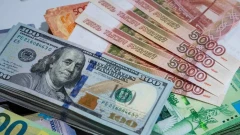
For Armenian producers, competing on price would be tricky, given the sharp devaluation of the Ruble against the Armenian Dram, the expert added. Farmers would need the Dram to be sharply devalued, if they were to compete in the Russian market. In this regard, Armenia could follow Kazakhstan’s lead, which has recently devalued its tenge not only because of weak oil prices, but also aiming at the Russian market.
Situation is unclear as to when the sanctions may be over. There is now a lot of discussion that the EU may at least start to relax this sanction if there is any progress towards the implementation of the Minsk II agreement.
“In that event Russia might respond and start to relax the ban on imported food”, Weafer said.
On the other hand, Russia tries to source imported food from elsewhere, trying to give edge to potential political partners, BRICS countries in particular. “There is, for example, more food in Moscow stores from South Africa, Turkey and Latin America than was the case pre 2014”, he added.
However, as Russia moves forward with its efforts to cut reliance on imported food and medicines, it will likely be less inclined to support big imports from any country. Its preference will be to try and persuade the foreign companies to invest in Russian industry and to grow food in Russia.
This means that even after the sanctions end there may still be other administrative blocks put in place to slow imports from the West. But that cannot apply to member states of the EEU. So Armenia, Belarus and Kazakhstan will have a relatively better position, Weafer concluded.
Presumably, Armenia’s saving grace could be the membership in the Eurasian Economic Union, where one of the core principles is the free movement of goods.