make preferable
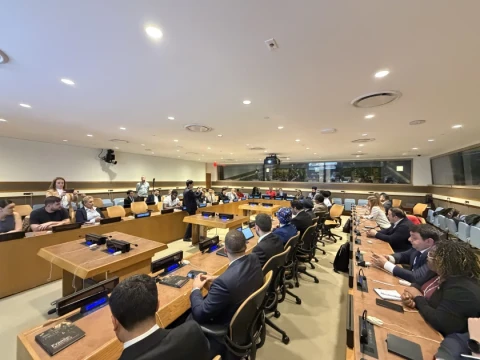
Аt a recent briefing at the UN General Assembly, Philip H. Gordon Assistant Secretary, Bureau of European and Eurasian Affairs, summed up the meetings U.S. Secretary of State Hillary Clinton had with the Armenian, Turkish and Azerbaijani Foreign Ministers.
“It was on Friday that the Secretary met with Foreign Minister Mammadyarov of Azerbaijan. She underscored the United States continued strong support for the Nagorno-Karabakh process. Also in the meeting was our new Minsk Group co-chair – that is to say, representative to those talks Ambassador Robert Bradtke, a highly experienced diplomat whose designation in this job underscores how keen we are to see progress on that front. The Secretary also raised the important questions of human rights and democracy in Azerbaijan, including the case of the bloggers who were recently beaten up and arrested….
”This morning, she met with Armenian Foreign Minister Nalbandian and she stressed our very strong support for the continued Turkey-Armenia normalization process. She made clear that, for the United States, that is a process that should move forward without preconditions and within a reasonable timeframe. She also raised the issue of democratization in Armenia. She welcomed the government’s recent release of political prisoners and underscored that that’s an important issue to the United States and it would facilitate our full partnership…
“Meeting with the Turkish Foreign Minister Davutoglu just now; the Secretary and the foreign minister discussed a very wide range of issues. The U.S.-Turkish partnership is characterized by its depth and its breadth, and so the ministers, I think, reflecting that, talked about Turkey-Armenia, and again, she stressed our support for that process.
They talked about Cyprus, energy security, Afghanistan-Pakistan, Iran, Middle East peace, and probably some other issues…”
Philip Gordon then answered journalists’ questions. As regards the details of the Armenia-Turkey normalization process, he said that “we’re leaving – this is a Swiss-mediated process between Turkey and Armenia, and it’s for them to announce details on signings and so on.”
As regards the “reasonable timeframe”, Gordon said “this is a difficult process that faces some political opposition in both places…And so when we say reasonable timeframe, we mean…it’s not just the process that we want to see…but we also want to see a conclusion to the process…”
Asked to “spell out preconditions”, namely “that the Armenians don’t stipulate that the Turks recognize the genocide,” Gordon said that “no preconditions means no preconditions on either side. There are lots of things that one could try to link this process to, and what we are saying is that the process is inherently valuable, that we think that Turkey-Armenian normalization is a good thing, and it shouldn’t wait for other things to get done or be linked to other things; it should go ahead…Armenia, without an open border with Turkey, is isolated. We saw during the war in Georgia in August 2008 that it could be even further isolated when negative things happen in the region. And a normal relationship with Turkey would really be a historic development that would benefit the people of both countries today…I mentioned in the context of the Secretary’s meeting with the Azerbaijani foreign minister the Nagorno-Karabakh process… If we could succeed on these multiple tracks, we would really take a major step towards peace and stability in the Caucasus, energy corridor across the Caucasus, and prosperity in the region…”