make preferable
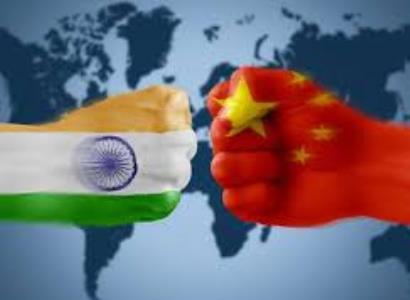
China-India standoff risks unintentional war, AP reported citing experts.
In 45 years, a series of agreements have supported a difficult ceasefire along the border on the eastern edge of the Himalayan region of Kashmir. But actions and clashes over the past several months have made the situation unpredictable, increasing the risk that a miscalculation on either side could have serious consequences.
“The situation is very dangerous on the ground and can spiral out of control,” said Lt. Gen. D.S. Hooda, who was head of the Indian military’s Northern Command from 2014 to 2016. “A lot will depend on whether the two sides are able to control the volatile situation and make sure it doesn’t spread to other areas.”
The countries have unsuccessfully held several rounds of talks, mainly with the participation of military leaders. In a sign that talks are now moving to the political level, their defense ministers met in Moscow on September 4 to try to break the deadlock. This was the first high-level direct contact between the parties since the start of the standoff in Ladakh four months ago.
Last week, the two most populous countries in the world, which are separated by thousands of kilometers of a disputed border, accused each other of provocations.
India said its soldiers halted “provocative” movements by the Chinese military twice last week. In turn, the Chinese defense ministry has accused Indian troops of crossing established lines of control and provocations along the border.
Tensions first arose in early May as a result of fighting between soldiers on both sides. The situation escalated sharply in June, when 20 Indian soldiers were killed and dozens were injured in a scuffle.
The standoff concerns disputed stretches of untouched landscape in a region that boasts the world's tallest runway and glacier feeding one of the world's largest irrigation systems.
Hooda said that while he does not think that either side is seeking full-scale war, the "real calamity" is the violation of existing agreements and protocols.
Wang Lian, a professor of international relations at Peking University in Beijing, believes the likelihood of open war is unlikely, as both sides have shown restraint in recent clashes. But according to him, New Delhi is under pressure from internal anti-Chinese sentiments and encouraged by tougher US measures against Beijing.
“I don’t think (India) would go so far as to escalate military conflict of a larger scale, but I believe both sides are making some preparations,” Wang said.
India and China share a disputed and unmarked 3,500-kilometer border known as the Line of Actual Control, which stretches from the Ladakh region in the north to the Indian state of Sikkim.
Defense analyst Rahul Bedi noted that India changed the rules of war on the border after the deadly June clash. According to him, local commanders were given “freedom to initiate adequate and proportionate responses to any hostile acts” by Chinese troops.
Members of India's strategic community, including military analysts and retired generals, say the Chinese military is opening new fronts and deepening mistrust.