make preferable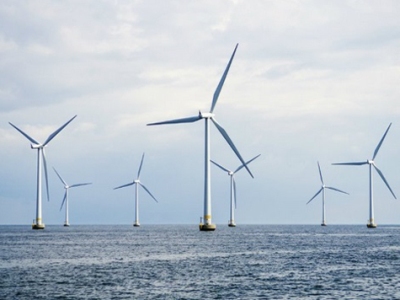
Denmark will increase its planned offshore wind power capacity in the Baltic Sea to 3 gigawatts and connect it to Germany's grid, a step toward ridding Europe of its dependence on Russian gas. Once established in 2030, it will be able to power up to 4.5 million European homes, AP wrote.
The 470-kilometer-long submarine cable will pass through the Danish island of Bornholm in the Baltic Sea to northern Germany, allowing electricity to be sent directly to the German energy system and on to the rest of Europe.
Currently the offshore wind power capacity in Denmark and Germany is 1.5 gigawatts and 1 gigawatt.
German Economy and Climate Minister Robert Habeck called the project a flagship project and added that through projects like this among European partners, they are simultaneously achieving two key goals: European energy security and climate neutrality. The deal was announced Monday in Copenhagen.
Danish Energy Minister Dan Jorgensen added that international cooperation is needed more than ever to further reduce greenhouse gas emissions and make Europe independent of Russian gas and oil.
On Friday, German Foreign Minister Annalena Baerbock said it was estimated that Baltic Sea wind could produce more than twice as much energy as all German coal-fired power plants.
The countries around the Baltic Sea need to put their sails up, work together and set a course to make our region more sustainable, more resilient and more secure, Baerbock said.
German Chancellor Olaf Scholz said Germany remains committed to the goal of ending greenhouse gas emissions by 2045, the earliest deadline of any major industrialized country. To achieve that goal, his government said it would close coal-fired power plants that have been rehabilitated because of the conflict in Ukraine, stop importing Russian oil and coal this year and set a goal of ending the use of Russian gas within the next two years.
The announcement was made Monday, a day before a meeting in Copenhagen to discuss ways to free the Baltic Sea region from Russian energy and at the same time pave the way for a significant green transition, according to a Danish government statement.
The meeting is expected to be attended by the president of the European Union executive commission, the president of Lithuania, the prime ministers of Poland, Latvia, Estonia, Finland and Denmark, as well as several energy ministers.