make preferable
Nationalizations. Subsidies. Cash handouts. Price controls. Profit taxes. Europe is reverting to 20th-century economics, the New York Times reported.
Governments are resorting to old-fashioned solutions that have long been considered bad policy, allocating huge sums of money to the energy crisis gripping the region in an attempt to avert a political, social and economic crisis.
Confrontation with Russia over Ukraine is rapidly overturning European economic orthodoxy, barely a dissenting voice at European Union headquarters in Brussels, a bastion of neoliberalism that not so long ago imposed austerity on its members, most notably Greece, even after it became clear that it was harmful.
But today, EU leaders have little choice. Russia has cut natural gas supplies to most of the European Union to a minimum, and the cost of fuel - and thus electricity - has reached an all-time high and continues to rise.
In response, EU governments have already allocated more than $350 billion to subsidize consumers, industry and utilities. Ministers are scheduled to meet Friday to complete direct EU intervention in markets to make super profits, cap electricity prices and subsidize utilities.
Government intervention is back in vogue in a very broad sense, said Mujtaba Rahman, director for Europe at consulting firm Eurasia.
It's really about gaining public support through an incredibly difficult winter and 2023, in terms of deterring Russian aggression, a liberal international order, to bring the conflict to an end, he said.
Huge government spending adds to the nearly trillion-dollar stimulus package enacted over the past year to deal with the economic consequences of the pandemic, largely through borrowing. Bloating the debt load would normally cause a storm of resentment in a bloc where fiscal conservatism has dominated politics and policy for years.
The lack of opposition is a result of how much politicians fear European consumers and businesses will be unhappy with astronomical energy costs, leading to social unrest and political chaos as well as recession.
European leaders certainly hope so, because spending levels will be hard to maintain. The German government on Sunday announced a $65 billion support package, the third and largest so far, that includes direct cash payments to the most vulnerable consumers and tax breaks for energy-intensive businesses.
The Belgian government handed out $100 to every family regardless of income.
The Greek government, which faces elections next year, has allocated nearly $7 billion, or about 4 percent of its annual output, over the past three months to subsidize all of the country's energy bills. To fund much of this spending, the country has already imposed a tax on excess revenues for energy companies that use sources other than natural gas.
And, in addition to monetary donations and subsidies, more direct market intervention is taking place.
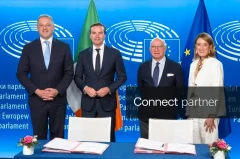
European Commission President Ursula von der Leyen has revealed proposals to solve the energy crisis. The proposals will be discussed by energy ministers on Friday, and the bloc may adopt a series of interventionist policies as early as this month, before the weather gets colder and the crisis becomes even more severe.
The European Union's fiscal restrictions are usually aimed at punishing countries whose deficits exceed 3 percent of annual output and whose debt burden exceeds 60 percent of output.
But they were suspended at the start of the pandemic to provide a massive stimulus package to support economies that have been hamstrung by blockages and supply chain failures.