make preferable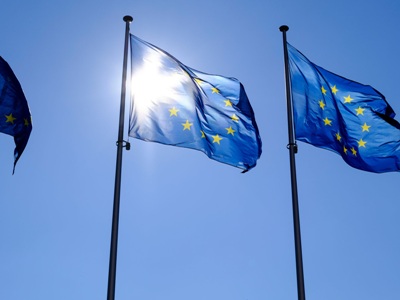
EU leaders met Thursday to try to resolve some of their remaining disagreements before the end of the year, ranging from ways to protect their industry from U.S. competition fueled by subsidies to new sanctions against Russia and restrictions on gas prices, Reuters reported.
At the summit, marred by a corruption scandal that erupted in the European Parliament last week, the leaders also faced the fact that Poland was delaying a deal on a minimum corporate tax and, by extension, an €18 billion loan for Ukraine.
After Belgian prosecutors accused Eva Kaili, a Greek member of the EU chamber, and three others for accepting bribes from World Cup host Qatar, European Parliament chief Roberta Metsola said the assembly "is not for sale".
The meeting of EU leaders in Brussels then turned to finding a joint response to the U.S. Inflation Reduction Act (IRA), a $430 billion tax break for green energy.
Poorer EU countries want a coordinated response and cautioned richer member states such as Germany not to support industry without showing solidarity with the rest of the bloc.
"We are in Europe at a point when we risk being deindustrialised, and today our answer is not a common answer," Belgian Prime Minister Alexander De Croo said.
"Today we see that too often countries are trying to install schemes on their own. It looks a bit like a game of the deepest pocket.
No deal is expected Thursday, but leaders intend to ask the EU executive commission to make proposals early next year to support the bloc's industry.
Commission President Ursula von der Leyen has proposed easing restrictions on state aid for renewable energy and clean technology because the U.S. law could lead to unfair competition from the United States.
While the EU's response to the U.S. law will be delayed until a later summit, the leaders will make another push to agree on a ninth package of sanctions against Russia.
Any decision requires unanimity, Poland and Lithuania warned that the proposed exemptions for food security could actually benefit Russian oligarchs in the fertilizer business.
Lithuanian President Gitanas Nauseda said it was important to keep the sanctions as tight as possible.
"We are a little bit concerned with attempts to weaken the sanctions under the cover of food security," he said.
The leaders are not expected to hold detailed talks on the EU's fight to agree on a ceiling on natural gas prices, but rather ask their ministers to urgently finalize the work when they meet again Monday, according to the draft summit conclusions.
Separately, Poland has delayed the EU's official adoption of a minimum corporate tax for large companies and, as a consequence, blocked a package of other deals, including financing for Ukraine in 2023.
Polish Prime Minister Mateusz Morawiecki said his country was being "blackmailed" by its EU counterparts, who insisted on passing the package as a whole.
Warsaw strongly supports aid to Ukraine, but said that agreeing to a global minimum tax could put EU countries at a disadvantage compared to those who would not accept it.