make preferable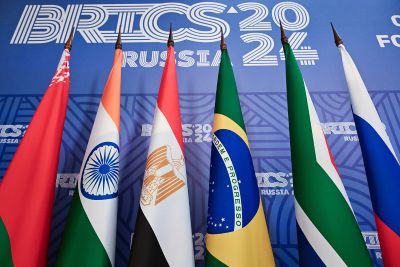
Leaders of BRICS, a group of developing countries, condemned the attacks on Gaza and Iran on Sunday. They also called for reforms to global institutions. The bloc was portrayed as a safe haven for multilateral diplomatic efforts amid violent conflicts and wars, Reuters reports.
Brazil's Luiz Inacio Lula Da Silva, in his opening remarks at the Rio de Janeiro summit, drew an analogy with the Cold War Non-Aligned Movement. This was a grouping of developing countries that refused to join either side of the polarized world order. Lula said to leaders that "BRICS was the heir of the Non-Aligned Movement."
"Multilateralism is under attack and our autonomy has been weakened once more." Lula warned business leaders on Saturday of the rise of protectionism by pointing out that BRICS countries now account for more than half of the world's total population and 40% its economic output. In 2009, the first BRICS summit brought together leaders from Brazil and India, as well as China.
In 2009, the bloc was expanded to include South Africa, and in 2012, Egypt, Ethiopia and Indonesia. Indonesia is the first country to be included in this summit. The BRICS fill the vacuum that others leave almost immediately, said a Brazilian who requested anonymity. The diplomat said that although the G7 still has a lot of power, it doesn't hold the same dominance as before. There are still questions regarding the goals shared by a BRICS group that has become more heterogeneous, as it now includes regional rivals and major emerging economies. Chinese President Xi Jinping sent his premier to the summit in lieu of himself, stealing some thunder.
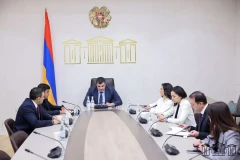
Due to an international criminal court arrest warrant, Russian President Vladimir Putin will be attending the summit online. Several heads of state, including Indian PM Narendra Modi, and South African president Cyril Ramaphosa, gathered at Rio's Museum of Modern Art for discussion on Sunday and Monday.
In a statement issued on Sunday afternoon by the assembled leaders, they called attacks against Iran’s “civil infrastructure” and peaceful nuclear installations a “violation of international laws.” The group expressed its "grave concern" over Israeli attacks in Gaza and condemned a "terrorist" attack that was described as a "terrorist act" by the Indian-administrated Kashmir.
The joint statement on trade warned that the increase in tariffs threatened global trade. This continued the group's veiled critique of Trump's US Tariff policies. The group expressed its support for Ethiopian and Iranian to join the World Trade Organization while calling to restore urgently its ability to settle trade disputes.
The leaders' statement endorsed plans to pilot a BRICS Multilateral Guarantees Initiative within the group's New Development Bank in order to lower financing costs for member states and boost their investment. In a separate press release following a discussion on artificial intelligence, leaders called for the protection against unauthorized AI use to avoid excessive data gathering and to allow mechanisms for fair payments.
Brazil, which is also hosting the United Nations Climate Summit in November, has used both events to show how serious developing nations are about tackling climate changes, while Trump has put the brakes on US initiatives According to two sources familiar with the discussions regarding funding the conservation of endangered forest around the globe, China and the UAE indicated in their meetings with Brazilian Finance minister Fernando Haddad that they intend to invest in the proposed Tropical Forests Forever Facility.