make preferable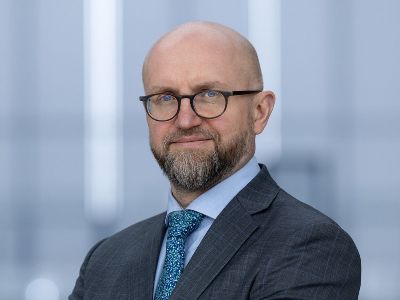
Interview with Chief Investment Officer, Public Sector (Region 2) & Project and Corporate Finance (Global) Clients, Mr. Konstantin Limitovskiy.
Could you please share an overview of AIIB’s operations and portfolio across South Caucasus and neighboring regions?
AIIB is actively engaged in the South Caucasus and neighboring regions through investments that promote sustainable economic growth, regional integration and long-term resilience. Our operations are guided by four thematic priorities: green infrastructure, connectivity and regional cooperation, private capital mobilization and technology-enabled infrastructure
To date, AIIB has committed USD 1,250 billion in Azerbaijan and Georgia, supporting strategic infrastructure that strengthens competitiveness and improves quality of life. For example, in Georgia our most recent investment supports greater access to healthcare services in underserved regions while also mobilizing private capital through the country’s first corporate social bond issuance. The financing helps expand regional medical services and procure equipment for a new oncology center, improving healthcare availability beyond Tbilisi.
With Armenia joining AIIB in 2025, we look forward to extending this regional partnership. Our engagement will build on Armenia’s development priorities while contributing to greater connectivity, energy resilience and sustainable infrastructure across the South Caucasus.
Armenia has recently joined AIIB. What does this mean for the country, and what opportunities does membership open up?
Armenia’s accession to AIIB represents an important milestone for both the country and the Bank. Membership gives Armenia access to AIIB’s long-term financing instruments, global expertise and partnership network across the region and beyond. This will help mobilize investment in infrastructure that supports Armenia’s national development priorities, while also deepening the country’s participation in regional cooperation platforms.
What is AIIB’s strategic interest in Armenia and its development agenda?
Armenia is a valued addition to AIIB’s membership for both strategic and economic reasons. The country has demonstrated strong commitment to structural reforms, macroeconomic stability and investment-led growth, making it a credible partner for long-term infrastructure cooperation.
Over the past decade, Armenia has maintained steady economic growth, supported by significant improvements in its business climate, fiscal management and public investment efficiency. We also witnessed that the government’s development agenda prioritizes economic diversification, connectivity, energy scrutiny and digital transformation – areas, where AIIB has strong sector experience.
Armenia’s geographic position also makes it important in the context of regional cooperation and connectivity. The country plays a potential linking role between the South Caucasus, Central Asia and the Middle East, and its integration into regional transport, trade and energy networks remains a long-term strategic objective for Eurasian connectivity.
What areas of cooperation are being discussed or considered between AIIB and the Government of Armenia?
Our discussion with Armenian authorities has focused on identifying areas where AIIB can add value through sustainable and innovative infrastructure solutions. Armenia’s membership can create new opportunities for the bank in terms of participating in major regional investment programs, as well as attracting public and private capital for the implementation of various projects. Some sectors are already under consideration, including large infrastructure projects, energy, water system management, and a number of other sectors. There is also strong interest in projects that integrate digital services into infrastructure planning.
What are the next steps required to move proposed projects forward, and what are reasonable timelines?
The process begins with project identification and feasibility studies – including environmental and social impact assessment – followed by structuring of financing. AIIB uses sovereign loans, non-sovereign funding, or blended finance depending on project type. Depending on project complexity, preparation can take from 6 to 18 months, with implementation over several years. Our approach prioritizes quality, long-term sustainability, and strong local partnerships.
Which sectors are most likely to be priorities for Armenia’s first projects with AIIB in the coming years?
The sectors that stand out are transport (improving road/rail connectivity), digital infrastructure (broadband coverage, telecommunications), energy (renewables, grid upgrades, energy efficiency), and water and sanitation. Armenia’s recent development strategy emphasizes digital economy and connectivity, making broadband expansion likely a key priority. The Bank is ready to support scalable projects in these areas that can also attract private investment and introduce technology-enabled solutions.
What are the terms under which AIIB invests in projects?
AIIB provides financing to both governments and private sector clients, depending on the type and needs of each project.To date, the ratio of sovereign to non-sovereign projects, by number, is 56% to 44%.
Sovereign-backed financing is extended to member governments or entities guaranteed by the government. These loans support public sector infrastructure in areas such energy, transport, and urban development. The terms typically include long tenors, competitive interest rates and tailored grace periods based on project needs and country context.
Non-sovereign financing is provided to private sector companies. These investments are structured on commercial terms and may include loans, equity or guarantees.
Some are concerned about debt sustainability with new external financing. How does AIIB approach this issue?
AIIB deeply considers debt sustainability in all sovereign operations. For every project, we assess the fiscal impact on the member country, ensure that expected economic returns, social benefits, and revenue generation justify the investment. Projects are structured with long tenors and favorable terms where appropriate, and risk mitigation is built in. The goal is to support infrastructure that delivers lasting value - in connectivity, jobs, services - without imposing undue financial burden.