make preferable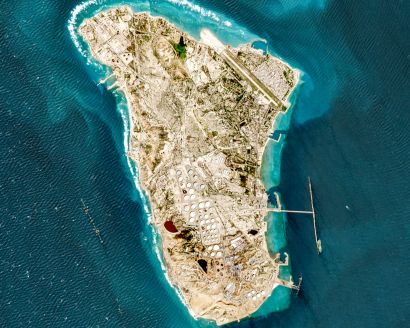
Kharg Island, through which around 90% of Iran's oil exports pass, is considered one of the country's most sensitive economic targets. Despite the ongoing US-Israeli strike campaign, the terminal has not yet been attacked, The Guardian reports.
Experts warn that destroying or seizing Kharg would cause a sharp and prolonged oil price spike, as it would effectively take all of Iran's daily exports offline.
"We could see $150 per barrel if Kharg is attacked, after prices reached $120 on Monday," says Neil Quilliam of Chatham House. "It is too important for global energy markets."
Although the US has struck 5,000 targets in and around Iran, it has refrained from hitting oil infrastructure, even as prices remain nearly $20 higher due to the threat of Iranian retaliation that has effectively paralyzed tanker traffic through the Strait of Hormuz.
The island — a coral formation about five miles long, 27 miles from the mainland — was built by American company Amoco and seized by Iran during the 1979 revolution. It sits where pipelines from Iran's central and western oil fields converge, close enough to deep water for large tankers. Normally 1.3–1.6 million barrels pass through daily, though JP Morgan says volumes were raised to 3 million barrels per day in mid-February in anticipation of a possible attack, with another 18 million barrels stored on the island as reserve.
Experts warn that attacking or seizing the terminal could cause serious harm to the global economy. "If the US seizes the island, Iranian oil production will be split. There will be production but no exports, and the US won't be able to produce either. It will send markets into chaos — a true deadlock," Quilliam warns.
Destroying Kharg could also undermine the long-term US-Israeli strategy of shaping a more stable future for Iran, depriving any future regime of vital oil revenues. For now, the strategic hub remains untouched to avoid a global "tail risk" on oil markets and avoid further complicating the political situation.