make preferable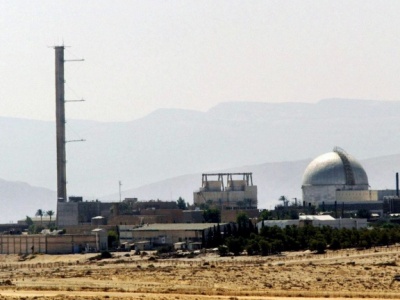
Israel is expanding the Dimona nuclear facility in the Negev desert, where it has historically produced fissile material for its nuclear arsenal, The Guardian reported.
New satellite imagery published by the International Panel on Fissile Materials (IPFM) shows construction work. The area to be treated is a few hundred meters southwest of the domed reactor and reprocessing point at the Shimon Peres Negev Nuclear Research Center, near the desert city of Dimona.
Pavel Podvig, a researcher with the programme on science and global security at Princeton University, said: “It appears that the construction started quite early in 2019, or late 2018, so it’s been under way for about two years, but that’s all we can say at this point.”
The Israeli embassy in Washington did not comment on the new photos. Israel pursues a policy of deliberate ambiguity about its nuclear arsenal, neither confirming nor denying its existence. The Federation of American Scientists estimates that Israel has about 90 warheads, made from plutonium produced in the Dimona heavy water reactor.
The nuclear facility is reported to have been used by Israel to create copies of Iranian uranium centrifuges to test the Stuxnet computer worm, which was used to sabotage Iran's Natanz uranium enrichment program. But that was over 10 years ago, long before the current expansion began.
Israel built the Dimona reactor in the 1950s with extensive covert assistance from the French government. By the end of the decade, about 2,500 French citizens were living in Dimona.
Dimona's role in Israel's nuclear weapons program was first revealed by a former technician at the facility, Mordechai Vanunu, who told his story to the Sunday Times in 1986. Before publication, he was lured from the UK to Italy by an Israeli female agent and kidnapped by the Mossad. Vanunu spent 18 years in prison, 11 of them in solitary confinement, for revealing Dimona's secrets.