make preferable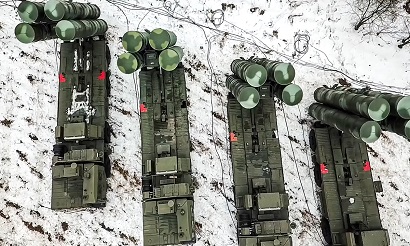
In an attempt to impose significant costs on Russian arms development and manufacturing companies as a means to strike at the Russian military amid the ongoing conflict between Russia and Ukraine, the United States recently announced new sanctions against the Russian defense industry, which, according to the media, could also affect Russia's arms trade, a vital source of income for the country, according to the Chinese publication Global Times.
However, the sanctions will not have as much impact as the U.S. believes because the Russian defense sector is independent and not dependent on Western technology, and the deployment of Russian equipment in real-world combat conditions can serve as a high quality advertisement that attracts increased demand, analysts said.
Analysts said, that the U.S. is also unlikely to impose sanctions against India, which is a major buyer of Russian weapons, because it still wants to use India to nail China, the media reported.
Among the U.S. measures adopted Wednesday, the State Department sanctions target 22 Russian companies that manufacture combat aircraft, infantry fighting vehicles, electronic warfare systems, missiles and drones for the Russian military, the U.S. media outlet Defense News reported Thursday.
These new U.S. sanctions will not deal a crushing blow to Russia, Chinese military expert and TV commentator Song Zhongping told the Global Times on Friday.
According to him, Russian weapons and equipment are known for their independent development, and most of them do not use Western technology.
If the cost of weapons and equipment increases because of sanctions, it will be a result of inflation, the analyst said, noting that Russia will also be able to overcome the financial sanctions it faces.
The Defense News report said sanctions could affect Russian arms exports, noting that Russia is the world's second-largest arms exporter after the United States, averaging more than $13 billion a year, according to the Congressional Research Service.
As analysts point out, arms and military equipment exports are a vital source of revenue for Russia, and while targeting this sector could hit Russia, it is easier said than done.
According to an anonymous source on Russia, military sanctions need to be observed from many angles. Only by sorting out the categories, the destination countries, and the methods of settlement can be understood how big the impact is on Russia's military and foreign trade. But overall, there shouldn't be much impact, Global Times reports.
Russian arms are mostly sold to India, Turkey and Iran. With the exception of Turkey, which is a NATO member, India and Iran are not under U.S. control, the analyst said.
Since Iran was excluded from SWIFT, its military trade with Russia had to be settled by other means that are not controlled by the United States, the analyst said.
According to the analyst, energy trade accounts for about 50 percent of Russia's foreign trade and 40 percent of its budget revenues, while agricultural products account for about 10 percent.
On the contrary, Russian weapons could become even more popular on the international market because they are combat-tested, Song said.
According to the expert, combat is the best and only way to demonstrate the effectiveness of weapons, and combat use of weapons will not allow Russia to lose the international arms market, but rather to gain even more.
Even before the Ukraine crisis, the U.S. tried to reduce Russian arms exports by imposing sanctions on buyers, and while this worked to some extent, it did not prevent Russian weapons from being in high demand, the Beijing-based military expert told the Global Times.