make preferable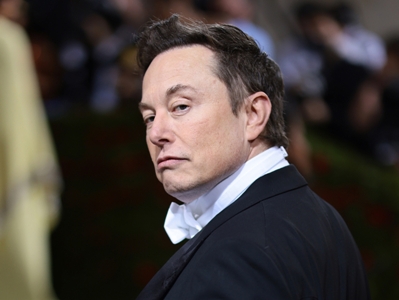
Inflation is certainly the word of 2022.
Soaring prices for goods and services have reached their highest levels in 40 years, significantly affecting the purchasing power of households, The Street writes.
To provide relief to consumers, the U.S. Federal Reserve launched an aggressive monetary policy characterized by steep interest rate hikes. Economists warn that such monetary policies, seen in other parts of the world as well, especially in Europe with the European Central Bank, risk causing a so-called "hard landing" for the U.S. economy. In fact, if the Fed continues such aggressive monetary tightening, it risks causing a recession.
While many companies have passed on rising costs to consumers by raising the prices of their products, many companies have also begun laying off workers. Alphabet, the parent company of Internet giant Google, recently warned that the company is likely to conduct layoffs in the near future to become 20 percent more efficient than it is today.
But despite the warnings, the Fed has decided to continue to fight inflation. During his last public speech before the September 21 Fed meeting, Fed Chairman Jerome Powell essentially solidified the case for a third consecutive 75 basis point rate hike.
Elon Musk, the richest man in the world, believes that if the Fed continues, as the markets now expect, to hike interest rates sharply, it will lead to deflation. In short, most goods and services will become ridiculously cheap.
Deflation is defined as the opposite of inflation. It is characterized by a continuous decline in the general price level. According to economists, it can induce households to postpone purchasing decisions in anticipation of further price declines and, above all, cause borrowers' financial situation to deteriorate.
The consequences could be devastating for the economy, as regular price declines encourage households to postpone purchasing decisions in anticipation of further price declines. This behavior can lead to a decrease in overall consumption and an increase in inventories by companies that can no longer sell their products. In response, they reduce production and investment.
Deflation can be caused by rising productivity or falling demand.
Deflation is rare in wealthy countries. There are only two such examples in the last century: the deflation of the 1930s, which affected the United States and then Europe, and the deflation that affected Japan's economy in the late 1990s.
This is not the first time Musk has predicted an era of falling prices. Last April, the billionaire already predicted that we would soon enter a "world of plenty" in which most things would cost nothing. But this deflation will not be caused by a monetary solution, but rather by significant advances in artificial intelligence and robotics, which will be increasingly used in our daily lives.