make preferable
Global energy markets are facing one of the most severe shocks in decades as the joint US-Israeli strikes on Iran and Tehran's retaliatory missile attacks on Gulf regions disrupt oil exports from the world's most important oil-producing region, Reuters writes.
The scale of the impact will likely depend on the duration of the conflict, but the threat and uncertainty are already strong enough to seriously affect oil flows from a region that supplies around 20% of global supply.
If there is no quick resolution, oil prices are likely to surge sharply when trading opens Monday morning. Benchmark Brent crude prices have risen in recent weeks to around $70 per barrel — the highest since August 2025 — amid expectations of a military conflict in the Middle East.
So far, there is no confirmed data on damage to oil and gas infrastructure from Iran's retaliatory strikes.
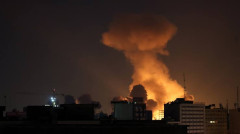
Explosions were recorded in the United Arab Emirates and Kuwait — two major oil exporters. Meanwhile, Qatar, the world's second-largest exporter of liquefied natural gas, reported intercepting missiles aimed at the country.
Explosions were also heard in Bahrain and near Iran's Kharg Island, through which roughly 90% of Iran's crude oil exports normally pass, though shipping data indicates Tehran has in recent days transferred much of the oil stored there onto tankers.
However, the absence of physical damage may not matter much. The risk that tankers could be blocked in the Gulf north of the Strait of Hormuz or become targets of attacks is already prompting producers, traders, and shipping companies to reconsider oil and LNG routing. Some major oil companies and trading houses have suspended shipments through the strait for several days.
This cautious approach is unlikely to change until there is confidence in the security of the region's shipping lanes.
Freight rates for tankers, which were already rising amid escalating tensions, will climb further. Base rates for very large crude carriers (VLCCs) from the Middle East to China have more than tripled since the start of the year, reflecting both increased risk and a reduced number of vessels ready for voyages.
The key question now is whether energy infrastructure will be directly attacked and how quickly US forces can secure shipping routes through the Persian Gulf and the Strait of Hormuz.
It is worth noting that the Strait of Hormuz has never been fully blocked. While Iran is unlikely to sustain a prolonged blockade, it is capable of temporarily disrupting vessel traffic. The US Navy will almost certainly respond quickly, but even brief attacks or mines could have an outsized impact on prices and supplies.
Global Supply Reserves
Today's global oil market is relatively well supplied, thanks to production growth in the US, Brazil, Canada, and other countries in recent years.
Saudi Arabia, the world's largest oil exporter, has also not been idle in the face of the supply disruption threat. In recent days the kingdom has increased crude shipments, which in February will exceed 7 million barrels per day — the highest since April 2023, according to analytics firm Kpler.
OPEC+ is set to agree on a production increase at a meeting on Sunday.
Of course, disruptions to export routes from the Middle East could offset much of the production gains of regional producers, though Saudi Arabia and the UAE have alternative export routes.
The scale of the US and Israeli strikes and Trump's rhetoric suggest Washington is preparing for a prolonged military campaign.
How threatened Iran's leadership feels will determine whether it escalates the conflict by attacking a broader range of targets across the region, including oil fields, export terminals, and processing facilities.
But even without the worst-case scenario, the conflict is already poised to seriously disrupt vital energy supplies from the Middle East in a way not seen for decades.