make preferable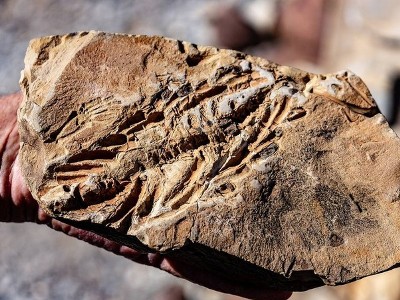
The discovery of a giant marine reptile skull in the United States has revealed new theories about the speed of evolution and how quickly the process can produce diversity, CNN reported.
The giant ichthyosaur fossil—with a skull measuring almost two meters in length, an estimated body length of more than 17 meters and a weight of 45 tons—was found in Nevada.
Ichthyosaurs are large extinct marine reptiles that dominated the sea more than 200 million years ago. Analysis of the skull of this particular ichthyosaur fossil has revealed a new species: Cymbospondylus youngorum.
The skull analysis was part of a larger research effort undertaken by an international team in order to understand how quickly body size evolved in ichthyosaurs when compared to the body size evolution of whales—another group of originally four-legged land vertebrates that returned to life in the sea, just like the ichthyosaur.
"Ichthyosaurs attained giant body size in a very short amount of time, evolutionarily speaking—just about 3 million years. In comparison, whales took about 45 million years to reach their largest body sizes," Lars Schmitz, an associate professor of biology at the W.M. Keck Science Department, said in a press release.