make preferable
The world economy is approaching recession. Economists polled by Reuters have once again lowered growth forecasts for key economies, while central banks continue to raise interest rates to reduce persistently high inflation.
One bright spot is that most major economies already in or approaching recession have relatively low unemployment rates compared to previous recessions. The latest survey suggests the smallest gap between growth rates and unemployment in at least four decades.
While this may reduce the intensity of the recession (most respondents say it will be short and shallow in key countries), it may also keep inflation elevated longer than many currently expect.
Most of the world's leading central banks are on track to meet their interest rate ceilings, but since inflation is still well above their mandates, the risk is that these rate expectations are too low.
Michael Every, global strategist at Rabobank, said that global recession risk is what everyone is talking about, and it has become central to the outlook.
According to Every, the low unemployment rate is problematic because it is a lagging indicator, and the longer it stays strong, the more central banks will feel they can keep raising rates.
Of the 22 central banks surveyed this time, only six are expected to meet their inflation targets by the end of next year.
Deutsche Bank analysts noted that history never repeats itself exactly, but since inflation forecasts over the past 18 months have generally been so poor, it is worth wondering what usually happens when inflation exceeds these thresholds.
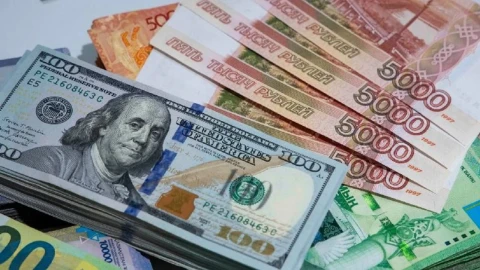
Meanwhile, global stock and bond markets are in chaos, while the A dollar is at its peak in currency markets, based on expectations for the U.S. rate.
Most economists said the chances of a sharp rise in unemployment in the coming year were low or very low, underscoring how widespread the view among forecasters is that this will not be a devastating recession.
Global growth is projected to slow to 2.3% in 2023 from an expected 2.9% this year and then recover to 3.0% in 2024.
More than 70% of economists, 173 of 242, said the cost-of-living crisis in the countries they cover will worsen over the next six months.
While the inflation cycle is global, exacerbated by a sudden spike in energy prices, much will depend on how much the U.S. Federal Reserve can raise rates. A fourth straight 75-basis-point interest rate hike is expected Nov. 2, and economists say the Fed should not pause until inflation falls to about half of current levels.
China, the world's second-largest economy, is expected to grow 3.2% in 2022, well below the official target of 5.5%, and well below the pre-pandemic growth rate. Except for a meager 2.2% growth after the first COVID-19 hit in 2020, this would be the worst performance since 1976.
The Indian economy is also projected to grow well below its potential over the next two years, with a median growth rate of 6.9% in fiscal year 2022-23 and 6.1% next year.
The eurozone economy will grow 3.0% this year, but will be unchanged in 2023, and then grow 1.5% in 2024.