make preferable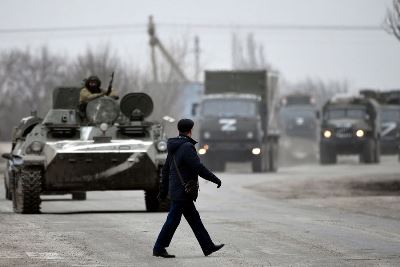
The year 2022 was an eventful one all over the world. Briefly about the main news of the past 12 months.
Protests in Kazakhstan
On January 2, protests erupted in Kazakhstan over rising gas prices. The unrest began in the gas producing town of Zhanaozen, then spread to Almaty and other cities of the country. Armed people looted stores and offices and set fire to cars.
After the resignation of the government, the president of the republic, Kassym-Jomart Tokayev, appealed for help to the leaders of the member states of the Collective Security Treaty Organization. The council decided to send a collective peacekeeping force to Kazakhstan to normalize the situation.
Russian peacekeepers evacuated more than fifteen hundred people from the country. By January 11, the unrest was completely eliminated.
Beginning of the Russian special operation in Ukraine
President Vladimir Putin announced a special military operation in the morning of February 24. The Russian army, together with the troops of the Donetsk and Luhansk People's Republics, launched an offensive in four main directions - from the north towards Kyiv, from the northeast towards Kharkov, from the southeast from Donbass and from the south.
A record number of sanctions were imposed against Russia
Since the start of the conflict in Ukraine, Russia has become the country against which the maximum number of sanctions has been imposed. Their total number (more than 10,000) exceeds that of Iran (more than 3,600), Syria (more than 2,500), and Venezuela (651), according to the Castellum.ai database. The United States imposed the most restrictions against Moscow (more than 2,700), followed by Canada (more than 1,900), Switzerland (1,667), the United Kingdom (1,660) and the European Union (1,444).
The longest suspension bridge opened in Turkey
On March 18, the longest suspension bridge in the world "Canakkale-1915" across the Dardanelles opened in Turkey. It became the fourth bridge across the Turkish straits. The price of the passage over it is 200 liras, or 12.2 euros.
The number 1915 in the name of the bridge refers to the victory of the Turkish navy on March 18, 1915 in the Gallipoli campaign. The main span is 2023 meters long, in honor of the centennial of the Turkish Republic, which will be celebrated in 2023.
Vladimir Zhirinovsky has died.
Vladimir Zhirinovsky, the founder and permanent leader of the Liberal Democratic Party of Russia, died April 6 after a serious illness. The politician was 75 years old.
In early February Zhirinovsky was hospitalized with a diagnosis of COVID-19 and had been in the hospital ever since. The doctors fought for his life, but his condition got better and then deteriorated again.
Vladimir Zhirinovsky went down in history as one of the most colorful, odious, impulsive and eloquent politicians.
French presidential elections
The second round of presidential elections in France ended on April 24. Emmanuel Macron, the current leader of the Fifth Republic, won: he has been in office since 2017. His main rival was traditionally the far-right politician Marine Le Pen.
On June 4, Canada and Denmark ended the so-called "intellectual war" over Hans Island.
The island was discovered between 1871 and 1873, the rights to it were contested by Canada and Denmark, which acted on behalf of Greenland.
The "intelligent war" itself has been fought between the states since 1984. Every few months marines from one or the other country would land on the island, remove the flag that had been planted there, and then drink the liquor that the opposing side left there as a gift. The Canadians left whiskey, and the Danes left schnapps.
The island was divided 60-40% in favor of Denmark, with the bay on one of the shores remaining in joint use, which is the only landing place.
British Prime Minister Boris Johnson resigned
On July 7, Boris Johnson, Prime Minister of Great Britain, one of the most ardent opponents of Russia, resigned. The reason for the resignation was a sex scandal that erupted because of an intoxicated member of Johnson's government. It caused a mass resignation from the Cabinet and "flushed" Boris Johnson himself.
Former Japanese Prime Minister Shinzo Abe was assassinated.
On July 8, Abe was speaking in the city of Nara on the eve of elections to the upper house of the Japanese parliament on July 10.
The attack on the former prime minister and the arrest of the suspect were caught on television cameras. The photo shows an unidentified man, who, judging by his clothes, clearly does not belong to the escort group, managed to get close to his victim from the back and shot him twice with a shotgun.
The attacker turned out to be 42-year-old Tetsuya Yamagami, who previously served in the Japan Maritime Self-Defense Force. He reportedly demobilized in 2005. The weapon used in the attack was homemade.
The signing of the "grain deal"
On July 22, 2022, the signing of the "grain deal" took place at Dolmabahce Palace. The ceremony was attended by UN Secretary-General António Guterres and Turkish President Recep Tayyip Erdoğan.
Russia and Ukraine signed a separate agreement on grain exports: each country signed a document with Turkey and the UN. Russian Defense Minister Sergei Shoigu, Turkish National Defense Minister Hulusi Akar and UN Secretary-General António Guterres signed the agreement with Russia. On behalf of Ukraine, the document was signed by Infrastructure Minister Oleksandr Kubrakov.
The parties managed to reach an agreement, according to which they worked out an algorithm for exporting Ukrainian grain on ships. It is known that ships with grain will be inspected near Ukrainian waters by joint efforts of Turkey and the UN. Russia insisted on this measure in order to prevent Ukraine from supplying weapons on these ships. Turkey provided guarantees that these arrangements would not be used for military purposes.
The second part of the deal was the removal of EU and U.S. sanctions on Russian fertilizers and food supplies to world markets.
Pelosi's visit to Taiwan: China-U.S. relations escalate
U.S. House Speaker Nancy Pelosi visited Taiwan on August 2. The provocation from Washington sparked a powerful mobilization of the Chinese army. Large-scale military exercises with the use of aircraft, ships, firing and other acts of military intimidation were conducted in the strait between the states.
Pelosi spent 20 hours in Taiwan, met with local authorities and assured them of full U.S. support.
After reports of Pelosi's supposed visit to Taiwan, relations between China and the U.S. escalated. Beijing reminds Washington of its adherence to the "one-China" principle that Taiwan has no sovereignty of any kind. Thus, the visit of an American politician to China was seen as a violation of the country's sovereignty.
Mikhail Gorbachev, the first and the last president of the Soviet Union, died.
On August 30, Mikhail Gorbachev, the first and the last President of the Soviet Union, died at the age of 92. The politician died as a result of a long illness, earlier it was reported that he suffered from one of his kidney diseases.
Assessments of his reign vary, with the West awarding him the Nobel Peace Prize, while in Russia he is often blamed for creating the largest geopolitical catastrophe in history.
Liz Truss became Britain's new prime minister, but was soon replaced by Rishi Sunak.
On September 6, Liz Truss was elected as the new Prime Minister of Great Britain. She was in office for six weeks or 45 days. Her reign was the shortest in the history of the United Kingdom. Her resignation was preceded by the failure of an economic rescue plan for a country that had plunged into recession because of anti-Russian sanctions. She was followed by Rishi Sunak, the son of migrants and the first Hindu prime minister in U.K. history, who settled in Downing Street.
Britain's Queen Elizabeth II passed away
Britain's Queen Elizabeth II died at Balmoral Castle in Scotland on September 8 at the age of 96. She had been on the throne since 1952.
The death of Elizabeth II ended the longest era in British history: most modern Britons did not know any other monarchs. The queen ruled longer than any other monarch and was the first monarch to live to the age of 90. Elizabeth II was buried Sept. 19 in the crypt of St. George's Chapel at Windsor Castle in London. The next British monarch was Elizabeth's son Charles, who took the name Charles the Third.
Partial mobilization in Russia
On September 21, Russian President Vladimir Putin announced a partial mobilization in the country. Only reserve servicemen, primarily "those who served in the Armed Forces, have certain military professions and relevant experience," will be called up for military service. Before being sent to their units, they will undergo an obligatory additional training based on their experience.
The announcement of the mobilization caused a mass exodus of the population from Russia. About 100,000 people in just one week moved to Kazakhstan, about 50,000 more went to Georgia. The influx of Russians was also felt by other CIS states - Armenia, Azerbaijan, Uzbekistan, Kyrgyzstan.
Explosions at the Nord Stream and Nord Stream 2 gas pipelines
September 26 - explosions at Nord Stream and Nord Stream-2 gas pipelines near the Swedish coastline. Later on it turned out that two three and five meter deep craters were found at the site of the accident. Besides, the explosion ripped out a pipe about 40 meters long. The pipes separated at a distance of 259 meters and one section of the pipeline was bent 90 degrees. The Russian side called the incident a terrorist act.
Explosion on the Crimean Bridge
On October 8 at 6:07 a.m., a truck exploded on the Crimean bridge, and seven fuel tanks of a train heading toward Crimea caught fire. At least three people were killed. The explosion collapsed about 250 meters of highway and burned seven tanks of the freight train. Several people were killed. Traffic on the bridge was completely stopped, the first such incident since its launch. In the evening of the same day, both road and rail traffic was partially restored.
Subsequently, the FSB reported that it had detained five Russians and three citizens of Ukraine and Armenia in connection with the explosion. According to the agency, the explosion was organized by Ukrainian military intelligence and its director, Kyrylo Budanov. According to the FSB, the explosive device was transported from Ukraine to Russia via Bulgaria, Georgia and Armenia
Xi Jinping elected to a third term as general secretary of the CPC Central Committee
On October 23, the Central Committee of the Communist Party of China (CPC) re-elected Xi Jinping as Secretary General of the CPC Central Committee for a third term.
Xi Jinping's predecessors had each led the country for two five-year terms. In 2018, however, the constitution was amended to allow for an unlimited term to lead the country.
U.S. elections: Democrats retained control of the Senate
On November 8, elections for the U.S. Senate kicked off. On Election Day, there were federal, state and local elections, including elections to the House of Representatives. The Democratic Party retained control of the Senate by a ratio of 50 to 49, according to the election results.
The world's population has reached 8 billion people: The eight billionth person is an Armenian girl, Arpi
On November 15, the world's population reached 8 billion people. At the same time 11 years ago, the population was one billion less. The eight-billionth person is a girl named Arpi, born in the Armenian city of Martuni.