make preferable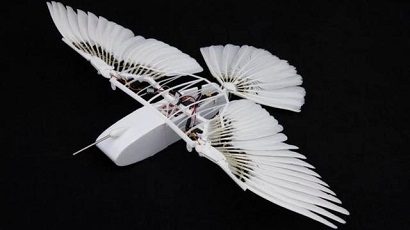
Researchers have created a pigeon-inspired robot with bird-like reflexes, enabling it to stay stable in turbulent conditions, Interesting Engineering informs. The details of the team’s research were published in the journal Science Robotics.
To regulate its movements, researchers developed PigeonBot II, a bioinspired aerial robot with morphing wings and a tail designed to mimic bird-like movements using a biomimetic skeleton and real pigeon feathers.
The robot can tilt, expand, elevate, or move its tail from side to side in addition to spreading its wings.
According to the team led by Eric Chang from Stanford University, the findings shed light on how birds, as opposed to airplanes, can fly steadily without a rudder or vertical tail.
Birds, unlike airplanes, glide without a rudder by constantly adjusting their wing and tail shapes. Airplanes rely on fixed structures like horizontal tails for pitch stability and vertical tails for yaw control.
While airplanes can use wing sweep or special designs to manage stability without a vertical tail, birds achieve rudderless flight more efficiently across diverse wing shapes without relying on drag-based mechanisms. This flexibility allows birds to maintain stability and control during flight, even in challenging conditions.
Pigeons, for example, show consistent reflexes when rolled, pitched, or yawed. These reflexes are stronger when simulated flight conditions, like air blowing on their feathers, are introduced. These reflexes allow birds to stabilize flight like self-controlled airplanes.