make preferable
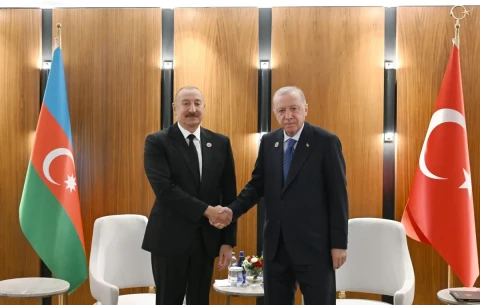
A new regional bloc has been forming in the greater Middle East, but it isn’t the Saudi-Israeli-Emirati alliance the US wanted. Call it the “Mecca Accords,” a joint defense agreement signed by Saudi Arabia, Turkey and Pakistan in the Islamic holy city on Friday. The three Sunni powers agreed that an armed attack on any of them will be viewed as an attack on all of them, The Wall Street Journal writes.
All three countries are officially US allies, but there is no hint of the Abraham Accords here. In choosing partners, the Saudis are pursuing a more conciliatory balance policy towards Iran. Turkey and Pakistan are also ambivalent, to put it mildly, about the fight against terrorism.
Turkish President Recep Tayyip Erdogan hosts Hamas and praises its fighters as “holy warriors,” while Pakistan’s relations with the Taliban and al-Qaeda are at best a double game. Egypt, which also attended the summit, conspicuously abstained from joining the pact. The new alliance could prove toothless. Does anyone believe that the Turks and Saudis will rush to the rescue the next time India and Pakistan exchange blows?
Riyadh already signed a mutual defense pact with Islamabad in 2025, and in the current war with Iran, Pakistan has reportedly moved some troops and an air defense battery to Saudi Arabia. It was more of a political signal than a real combat force. Perhaps that is the point. It is not Article 5 of the NATO charter at all, and when Iranian missiles are flying towards Saudi Arabia, they still turn to Washington for help, not Ankara, Islamabad, or even Beijing.
That is what matters most. But defensive alliances can also have other functions. For Turkey, the main goal is to extend its influence throughout the region. This is eloquently evidenced by its dominant presence in Syria, as well as its growing military contingents in the occupied part of Cyprus, as well as in Iraq, Qatar, Libya, and Somalia. Strengthening ties with other capitals gives Ankara diplomatic weight against the backdrop of promising arms deals.
Pakistan has acted as a mediator between the US and Iran and sees an interest in being at the epicenter of events. It also has a fundamental economic interest in containing a conflict with Iran for the sake of uninterrupted oil and gas supplies. Regional coordination is one way to achieve this.
Saudi Arabia is diversifying its partners and showing that, in the face of war with Iran, its confidence in Washington as its protector has diminished. Riyadh spends about $80 billion a year on defense, significantly more than Israel and incomparably more than Iran, but imported equipment will not replace combat experience and the will to fight. The pact with Turkey and Pakistan may be complementary in that regard, but the Saudis have yet to prove their ability to lead the regional order. There is also a nuclear implication here.
Turkey’s entry into the Saudi-Pakistani relationship, which has a vague component of developing nuclear weapons, should be cause for concern. In February, the Turkish foreign minister responded live on air, and with a long pause and a smile, to a question about Turkey’s need to acquire a nuclear bomb. All of which underscores the need for the US Congress to insist that the Saudi nuclear deal exclude domestic uranium enrichment.
When a superpower acts chaotically, regional powers begin to take matters into their own hands. That can be good, when local players take on more responsibility, or bad, when allies pander to enemies and act against interests. This is clearly the case, The Wall Street Journal adds.