make preferable
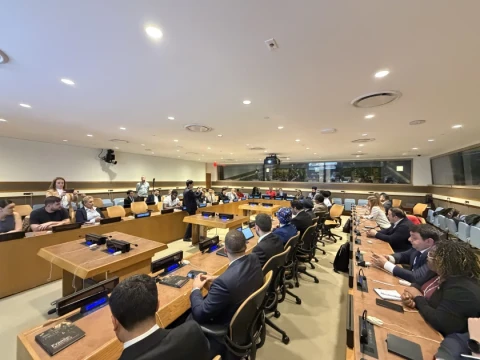
Not being content with fanciful tales about the “great national leader” of the Azerbaijani people in the person of the former “partycrat” Heydar Aliyev, the Baku ideologists decided to coin a “new word” in the world ideologies. The term, “the Azerbaijanis”, in a collective sense, seemed to be an umbrella for all the ethnic minorities in the country to “feel cosy” under. It was in this vein that Farhad Mamedov of the Political Analysis and Information Department, Azerbaijani Presidential Administration, made a speech at his meeting with the participants in a summer camp for young leaders.
Besides the newly coined term, “the Azerbaijanis”, the young official from Baku made a number of quite interesting statements, which are actually disproving evidence against many postulates of official Azerbaijani propaganda, namely, the ones that the Azerbaijani people has ancient history. Speaking of national identity, Mamedov pointed out that the process of identification of the Azerbaijani people started late in the 19th century thereby disproving the numerous theories about “the centuries-old history and cultural heritage” of his people. In any case, it would be ridiculous even for Azerbaijanis themselves to speak of “ancient history and cultural heritage” with the fact of national identity lacking.
The Aliyev Administration representative expanded on a positive role of the “ideology of the Azerbaijanis” in establishing peace and public accord in independent Azerbaijan. Quoting the official, 1news.az reports that the benefit of the ideology is in its being capable of uniting everybody. “Unfortunately, early in 1990s, we witnessed the Popular Front of Azerbaijan coming to power and setting different sections of the population against one another. We must not forget that. However, after the national leader Heydar Aliyev came to power, the problem was resolved. As a matter of fact, that period saw the formation of a new identity supposed to unite different sections of the population,” Mamedov said.
No doubt, Heydar Aliyev inherited favorable preconditions for forming a practically monoethnic state. The rule of the Popular Front of Azerbaijan (PFA) was marked by slaughters of Armenians in Baku, Sumgait and Kirovabad. After the pogroms in early 1990s, not only Armenians, but also native Russians (several hundred thousands) left Azerbaijan. In early 1980s Azerbaijanis constituted only 47% of the Baku population, whereas they are actually the only residents of the Azerbaijani capital now. A similar situation can be observed throughout Azerbaijan. So it is easy to invest a new ideology termed “the Azerbaijanis”, which is an umbrella for “all the ethnic minorities to feel cosy” under.