make preferable
The civil peacekeeping was in a passive state prior to the April events.
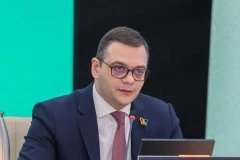
Political analyst Masis Mailyan (upon the decree of the Nagorno-KAtabakh Republic (NKR/Artsakh) President he has been appointed Ambassador-at-Large, and conferred with the diplomatic rank of Ambassador Extraordinary and Plenipotentiary of the NKR) writes the aforementioned in a long analytical article published in the journal Analiticon.
In his words, the main “driving force” of the peacekeeping projects in the region—the EPNK consortium—ceased its activity in May 2015, planning to start new projects by fall 2016. “April brought with itself certain restrictions on holding discussions with the participation of a large scope of experts and civil society activists from three conflicting countries, although two expert meetings on strategic planning were organized,” Mayilyan noted.
According to him, the April war served as a test for the public figures of Karabakh, Armenia and Azerbaijan, who have been dealing with civil peacekeeping in the framework of different international projects for many years.
“A unique “screening of peacekeepers” took place. Most of the officials preferred not making statements in favor of peace, while a certain part activated only after oral agreements on ceasefire had been reached. There were also those who were for the continuation of the broken out war and who began to publicly withdraw from the honorable and responsible mission of a peacekeeper. Only a small number of public figures consistently continue fulfilling their functions,” the analyst writes.
According to him, the resources spent by the international donors on the Karabakh conflict settlement didn’t overall yield the expected results.
The analytic also notes that in the article “Approaching prospect for peace: 20 years of civil peacekeeping in the context of the Nagorno-Karabakh conflict” published in International Alert by authors from Karabakh, includes recommendations, which stress the need for coordinating all the peacekeeping initiatives and efforts, creating a network of peacekeeping organizations and forming the collective responsibility of the peacekeeping project participants for the fate of the peacekeeping process.
''The dispersion of peacekeeping projects is one of the reasons of the insufficient effectiveness of peacekeeping in general,'' the article reads.