make preferable
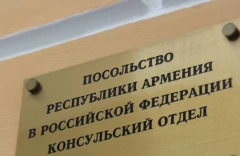
Russia continues its vigorous activities in the Caucasus. This time it is the Armenian-Azerbaijani relations in the context of Nagorno-Karabakh, writes a certain Andrey Sichkar, a contributor to proUA.com.
NEWS.am believes Andrey Sichkar to be a pen name of the author as we failed to the find the author among the well-known Ukrainian experts to apply for explanations.
The Kremlin has traditionally supported Armenia, whereas it has had rather cool relations with Azerbaijan. Baku, in turn, has traditionally been seriously influenced by London and Ankara. But the situation is different now. Russia is trying to establish active energy cooperation with Azerbaijan and Turkey. Naturally, it is not only energy projects, but also geopolitics, that is in question.
The first geo-economic signal was sent out immediately after Presidents Medvedev and Aliyev signed an agreement on the purchase of Azerbaijani gas by Gazprom. Experts at once pointed out the importance of the agreement despite the small amounts provided for. The matter first of all concerns “a spoke in the wheels” of the Nabucco project, which implies “paying a huge bill” – not only in terms of money. As to Azerbaijan, establishing control over Nagorno-Karabakh is a major geopolitical issue for that country. Baku and Moscow were reported to have reached a “gas for territories” informal agreement while the gas agreement was being prepared.
The second signal was received after Vladimir Putin’s visit to Turkey. We would remind the reader Russia was permitted to carry out necessary geopolitical activities under the South Stream project. A “bill” will be paid as well – and not only in terms of economy.
Interestingly, summing up the visit, Turkish Foreign Minister Ahmet Davutoğlu stated closer relations between Turkey and Russia would have a positive effect on the Nagorno-Karabakh peace process. He also stated Russia had recently made numerous steps toward the settlement of the Nagorno-Karabakh conflict. So we can suppose the issue was actively discussed at the top-level meetings and can hardly be reduced to Vladimr Putin’s statement on Russia being interested in this settlement, but being against any conflicts arising in the Caucasus. This all is one more reason for optimism in Azerbaijan.
In fact, Azerbaijan is showing a most warlike attitude. Specifically, Azerbaijani Ambassador to Russia Polad Bul-Bul oghly stated that a peace-enforcement operation against Armenia might be put on the agenda unless the Nagorno-Karabakh problem failed to be settled by means of negotiations. “Peace-enforcement is Azerbaijan’s right, which must be exercised,” the diplomat said. He pointed out Baku has the necessary means to carry out such an operation.
Secretary General of the Collective Security Treaty Organization (CSTO) Nikolay Bordyuzha made a comment on the Azerbaijani Ambassador’s strongly worded statement. He pointed out that the CSTO (with Armenia being a member thereof) “is based of a Collective Security Treaty. According to Article 4 of the Treaty, an act of aggression against one of the member-states is regarded as aggression against each of them… We are guided by this. All the rest is statements that, in such a complicated process as the Nagorno-Karabakh peace process, only cause harm, not bring benefits.”
For the present, both the statements can be regarded as merely provocative ones. However, the fact they were made indicates war parties are starting a game.
In Armenia the opposition political forces are actively discussing the progress in the Russian-Turkish relations, calling “the tendencies toward disturbing the balance in the region shown by Russia” dangerous for Armenia and Nagorno-Karabakh. They are really concerned over the changes in the Russian foreign-policy line in favor of Azerbaijani gas.
The Armenian-Azerbaijani negotiations have been intensified due to mediators. However, neither side appears to be content with the proposed schemes.
No doubt, it is Azerbaijan — with its energy resources — that holds all the aces now, trying to get Nagorno-Karabakh by closing a bargain with Russia. And they are doing pretty well! But the key question that remains unanswered is "Will the Kremlin have sufficient arguments for and influence on the Armenian elite, and will the incumbent Armenian authorities be able to retain power after giving Nagorno-Karabakh up?
But in this case, the “Sheriff” may not worry about “Native American’s” problems. Should a new Armenian-Azerbaijani war break out — with Russia pursuing a deliberate hand-off policy toward the conflict – it, if does not prove fatal to the pro-European energy projects involving Azerbaijan, will certainly cause a delay in launching them and send oil prices up. Both the schemes are theoretically of benefit to Russia, which thus will kill two birds with one stone and get a powerful energy ally in the region.