make preferable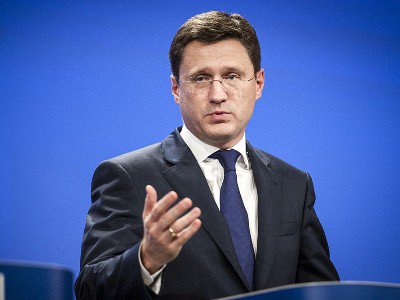
Russian oil and gas cannot be replaced on the world market within a five to the ten-year horizon, Russian Deputy Prime Minister Alexander Novak told Energy Policy magazine.
Even statements about the termination of energy supplies from Russia lead to surges in prices on world markets, while physical restrictions are fraught with new historical records.
He noted that after the imposition of sanctions against Russia in March, an unprecedented rise in energy prices and high volatility was recorded.
At its peak, the cost of gas reached almost $4,000 per thousand cubic meters, oil was close to $140 per barrel, and coal was traded at $460 per ton. And experts are sure that this is not the limit. Today, the world energy markets continue to be in an uncertain state, the Deputy Prime Minister said.
Commenting on the plans to impose new sanctions on the import of Russian energy resources by Europe, Novak noted that the share of oil supplies to the EU countries from Russia reaches 30%, gas - 40%, and the share of Russian coal in total European imports is about a third of all purchases.
The resolution of the European Parliament on the ban on the import of Russian energy resources notes that the decision must be accompanied by an action plan aimed at guaranteeing the security of the EU energy supply. However, key players in the industry agree that it is unlikely that it will be possible to completely replace Russian oil and gas in the next 5-10 years, he added.
He noted that in Europe they tried to reduce dependence on Russian gas with the help of coal, the price of which has also increased.
The rapid return to coal generation is taking place against the backdrop of statements by the EU countries on the decarbonization of the economy and achieving carbon neutrality by 2050. According to the International Energy Agency, global carbon dioxide emissions in 2021 increased by an average of 6% and reached a record 36.3 billion tons. One of the leaders was the US and the EU with rates of about 7%. The main reason for the growth in emissions was just the use of coal, Novak commented, adding that Germans began to massively stock up on firewood.
At the same time, in March in Europe, there was a drop in electricity generation due to wind generation. For example, in the week from March 14 to March 20, wind farms provided an average of 17% of electricity generation in the EU, and on March 29 this figure fell to 7.5%, the lowest value since the end of December.
OPEC said they would not be able to compensate for the decline in Russian oil supplies to the world market.