make preferable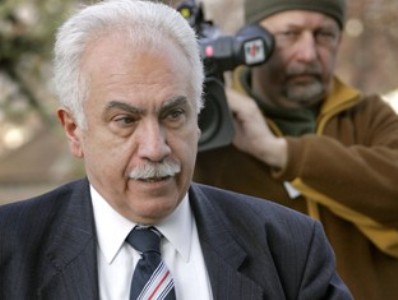
The ruling by the European Court of Human Rights (ECtHR) on the case of Perinçek v Switzerland is unconvincing in both its reasoning and conclusion
Swiss law professor at the University of Fribourg, Gerhard Fiolka, told the aforementioned in an interview with swissinfo.ch.
In his words, with its decision, the European Court seriously interfered with states’ margin of discretion.
''In Europe, freedom of expression is by no means understood to be unlimited, but the legal verdict contains various interventions in the freedom of expression,'' he said.
Fiolka is not convinced by the reasoning of the Grand Chamber that denying the Holocaust is the expression of an antidemocratic and anti-Semitic ideology and, as such, is dangerous. According to him, ''mere assertions are thus the basis of differentiating the Shoah and other genocides – a difference that objectively doesn’t stand up and that once again portrays the Jews as a special case.''
''The denial of genocide traumatises the affected parties for a second time, making them victims again. Also, denial also often implies that the “alleged” victims want to cash in on a genocide myth, which directly affects the group’s reputation. What’s more, genocide and crimes against humanity are serious offences which concern the interest not only of the affected individuals but also humanity as a whole,'' the professor said.
In October 2015, the Grand Chamber of the EctHR rejected the claim of Switzerland, which had convicted leader of the Turkish Workers' Party, Doğu Perinçek, of denying the Armenian Genocide. Nevertheless, all the assessments calling into question the Armenian Genocide were removed from the former judgments of the court made in 2008.