make preferable
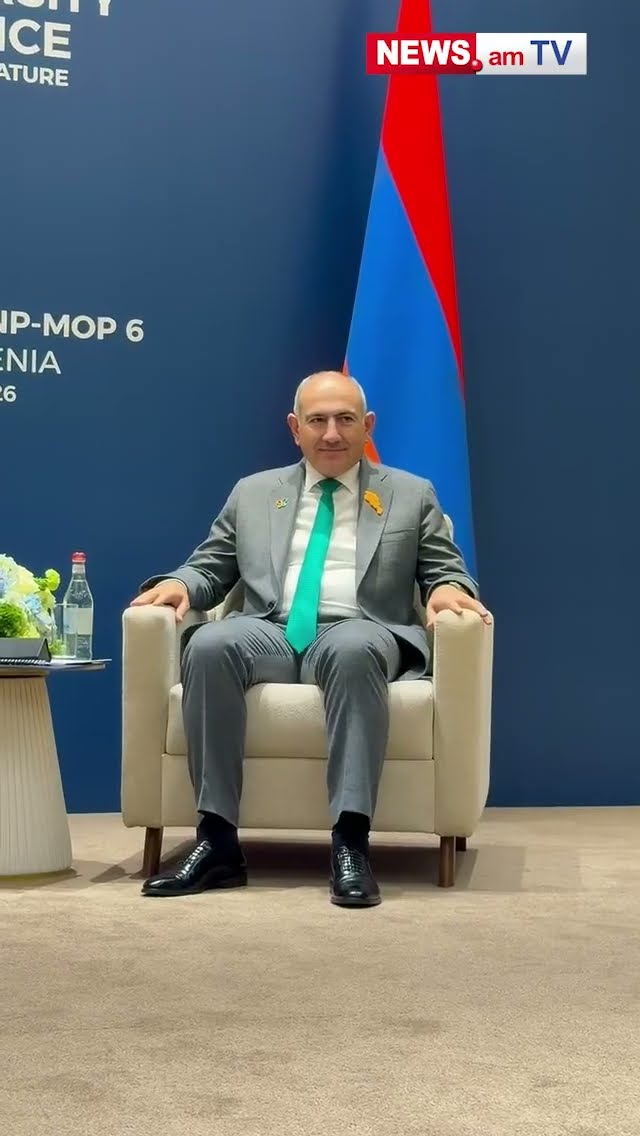
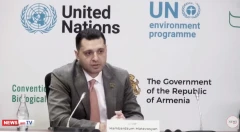
We have never discussed and are not discussing the matter of our constitution with Azerbaijan, because we consider it our internal matter. Armenian Prime Minister Nikol Pashinyan stated this during a press briefing in Hamburg, Germany—and responding to a question about Azerbaijan’s demand to change the constitution of Armenia.
According to Pashinyan, Armenia has no preconditions regarding the signing of the peace agreement with Azerbaijan. “I am asking a simple question. I say I want to understand: does Azerbaijan want there to be territorial claims [against Azerbaijan] in our constitution, or does it sincerely think that there are territorial claims in our constitution? If it sincerely thinks there is a problem there, the quickest way to solve that problem is to sign the peace agreement. Why? Because when the peace agreement is signed, according to our legislation, we are obliged, forced — we cannot but send [it] to the Constitutional Court [of Armenia] so that the Constitutional Court checks that agreement’s compliance with the Constitution of the Republic of Armenia,” said the Armenian PM. According to Pashinyan, there are two options after that. “Either the Constitutional Court decides that the agreement complies with the Constitution of the Republic of Armenia. In that case, we have no obstacle to sending it to the National Assembly and ratifying [it].
When the agreement is ratified by the National Assembly, according to, I think, the third part of the fifth article of the constitution, in case of contradictions between ratified international treaties and our domestic legislation, the international treaty has greater legal significance.
When that agreement receives a higher legal significance, even if Armenia wants to, it will not be able to have territorial claims against Azerbaijan. Why? Because in the first article of that agreement — which is already a public document — it is written that, based on the reality that the administrative borders of the [former] Soviet Union’s republics have become state borders, the parties recognize each other’s territorial integrity, sovereignty and political independence.
In the second article it is said that on that basis the parties have no territorial claims against each other and commit themselves not to present territorial claims in the future as well. In another article it says that the parties cannot make reference to their internal legislation as justification for failing to implement the agreement. Therefore, when this agreement is ratified, even if Armenia wants to, it cannot have territorial claims against Azerbaijan — that is the first [option.] The second option [is that the Constitutional Court of Armenia] decides the agreement does not comply with our constitution. I said at the time that I myself say that in that case, I will myself initiate constitutional amendments, because I believe that the peace achieved is such a value that they say we must take daily care of [it] that it is worth going and making that constitutional change.
But today I do not have the legitimacy to tell the people of Armenia: ‘You know what, let’s change the constitution.’ Why? Because the people of Armenia will tell me that in September 2024 our Constitutional Court issued a decision that the Alma-Ata Declaration — which, by the way, is referenced in the preamble of the peace agreement — complies with our constitution.
Therefore why should we change our constitution? It would turn out that we are just changing the constitution merely out of whim. And what if after that whim a second whim appears, and after that a third whim appears, and then a fourth, and so on — what will we do?” Pashinyan said.
Also, he emphasized that the Armenian side has never discussed the matter of the constitution of Armenia with Azerbaijan, since it is an internal matter of Armenia. “But of course we have also never discussed and are not discussing the matter of our constitution with Azerbaijan, because we consider it our internal matter.
And with the logic of our internal matters, the [ruling] Civil Contract Party [of Armenia], in the concluding declaration of its recent congress, we reflected on the agenda of adopting a new constitution — which, by the way, we adopted back in 2018, saying that let us set aside this constitution, determine whether the parliamentary governance model is good or bad [for Armenia], because back in 2018, when I became prime minister, the [new] constitution had been in force for only two months, there were articles [in it] that were yet to come into force,” added the Armenian premier.