make preferable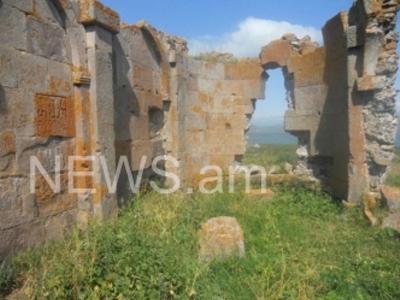
YEREVAN. – An abandoned Cyclopean masonry is located in Aspara village, Armenian-populated Javakheti Province of Georgia, on the western shore of Paravani Lake.
A vaulted church built in 12-13 centuries is located in the middle part of the masonry. During various studies, Georgians claimed it is Georgian church but its architectural style can be found only in the territory of Greater Armenia.
Researches showed that the church was built like ancient masonries of cyclopean type, on the foundation of destroyed pagan temples.

The ancient masonry occupies approximately two hectares. Aspara’s school, farm warehouses, office and cultural center, smithy and five houses, the majority of which have been destroyed, were built on the destroyed foundation of the external wall. An underground tunnel was found in the northwest part of the fortress and the second one was found in the southern part which leads to Paravani Lake.
These observations allow us to insist on the fact that the castle was the central part of the fortifications protecting the northern borders of Greater Armenia.
Now the church is half-destroyed. There is another ancient castle which is located on the top of nameless mountain 3 km far from Aspara village. The walls of the castle which have 4m width and residential buildings occupied two peaks of the mountain. The fortress is impressing with its unique architectural structure.

There is no historical source, as well as information, about those who built the masonry. The time of construction, the purposes of the building are unknown. Who were Javakheti inhabitants so afraid of that they built the castle 3,000 meters above sea level?
There are no trace of any work or building tools on the rocks of the dilapidated castle. The fortress was built by giants, and according to local residents, the giants were very tall and strong. The locals found giant human skeletons during agricultural work near the village.