make preferable
For a decade, Berlin wielded moral and financial authority in the European Union, led politics and played the role of "bad cop" for the weak southern economy. The energy crisis has upset this balance, Bloomberg reported.
Germany’s dependence on Russia has exposed the flaws in its economic model—high-intensity industry running on cheap gas—and the blindness of its political class to dependence on the Kremlin. While Berlin is still struggling with upheaval, the south of Europe is booming. This is not a crackdown on years of German-led austerity, but a redistribution of power that could eventually lead to a healthy EU, the source ntoed.
Spain's Environment Minister, Teresa Ribera, has rejected the European Commission's demand that 27 member states cut their energy consumption by 15% this winter. Ribera stated that Madrid had done their homework. He had little contact with Russia and has invested heavily in renewable energy. Most importantly, she argued, Spain was living within its means. The rebuke came at the height of the European financial crisis, when Berlin wrote the largest checks in exchange for structural reforms that deepened the economic downturn in the South.
This rhetoric was an unusual display of courage for a country like Spain, which is usually the net beneficiary of European funding. Reaction to her speech was divided between those who argued that the time had come to point out the Berlin anomalies and those who feared that such language might rekindle old tensions.
In my opinion, Ribera's comment was a mixture of both, reflecting anger at Germany's unwillingness to come to terms with the monumental failure of its policy towards Russia. While everyone else realized that "Made in Germany" was built on shaky foundations, Berlin still had to bite his elbows, which is usually the first step before asking for help.
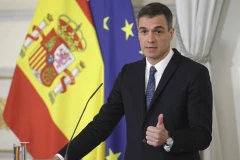
Spain first sounded the alarm about an energy crisis just as Putin began to cut supplies and markets began to show signs of stress late last year. Spanish Prime Minister Pedro Sanchez, who has faced enormous pressure to bring down inflation and the country's electricity bills, suggested last fall that a joint European response to rising energy prices was needed.
Madrid says it needs to improve energy connectivity with the rest of Europe. And spending cuts at home won't help countries like Germany if Madrid can't export its surplus. Spain's claim fell on deaf ears and was dismissed as another example of the South asking for handouts.
Energy only became a European problem when the stakes for Germany began to look huge.
This reflects the political problems of Europe and indicates ways to solve them. It's time to take the South's proposals more seriously. To their credit, the leaders of the South this week agreed to a deal meant for Germany with record speed, overcoming rhetorical resistance and avoiding the gloating of critics.
It would be stupid and short-sighted, and, above all, it would be a victory for Russia if the EU failed.
Ribera summarized that in Europe when a neighbor calls for help, you have to help. It is the same spirit that helped Europe get through the pandemic and see Germany cross a red line to settle for collective debt, a watershed moment for the EU. In addition, due to interdependence, European crises are largely insular: a recession in Germany, the eurozone's largest economy, will hurt everyone.
The conflict between North and South will set Europe back after a decade of collective problem solving. But perhaps given the scale of the German fiasco and the challenges it poses to Europe as a whole, Berlin should not be surprised that the South is gaining more influence.”